
14 min read ·
Choose One Family-Friendly Chicago Cluster and Build the Day Around It
Pick one of five compact clusters, reserve the anchor if needed, check its rules and keep later stops optional for a flexible family day.
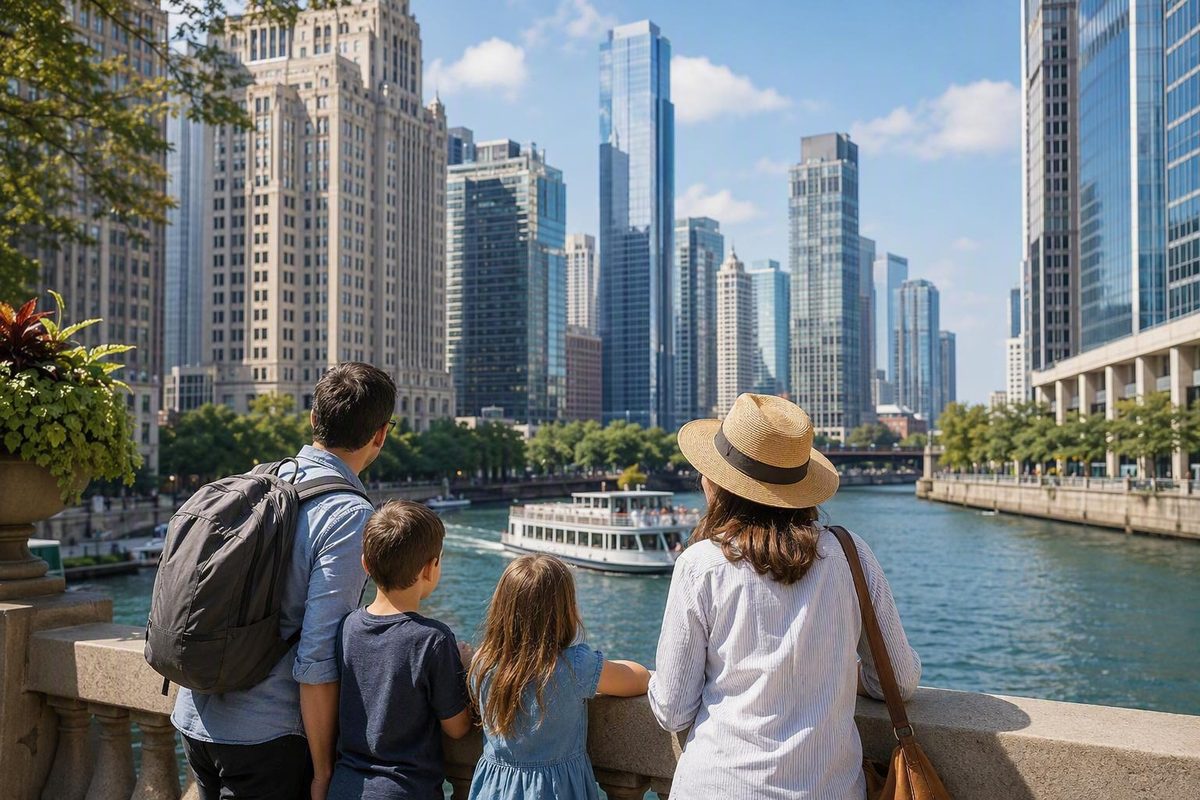
The easiest way to find things to do in Chicago with kids is to choose one compact area, make one attraction or play space the anchor, and leave everything else optional. For most families, that means one anchor, one active or outdoor break, and no more than one optional addition—not a race between distant attractions.
Choose the right Chicago family plan
These five routes are editorial planning suggestions, not tested or objectively optimal itineraries. Age ranges are guidance rather than guarantees: attention span, mobility, sensory needs, nap timing, crowd tolerance, and interest in the subject can matter as much as age.
| Family cluster | Strongest use case | Setting | Age considerations |
|---|---|---|---|
| Millennium Park and Maggie Daley Park | Active play and a flexible downtown half-day | Mostly outdoors | Strongest for children under 12 because that is the Play Garden’s overall age limit. Check the official Play Garden rules. |
| Museum Campus | A museum-centered day | Primarily indoors, with an optional lakefront break | Choose the Field Museum, Shedd Aquarium, or Adler Planetarium according to interests and attention span. |
| Navy Pier | Hands-on indoor play followed by one optional ride | Indoor museum plus indoor and outdoor pier attractions | Chicago Children’s Museum particularly suits families seeking interactive play; noise, lines, or crowds may challenge some children at busy times. |
| Lincoln Park | Animals and outdoor time | Mostly outdoors, with an indoor alternative in the broader area | Adaptable for mixed ages if the family chooses only a few zoo areas and keeps later stops optional. |
| One neighborhood destination | A specific interest outside the downtown core | Indoor or outdoor, depending on the destination | Match the attraction to the child rather than assuming every museum or activity suits every age. |
| Family cluster | Likely paid components | Transit availability | Most important detail to verify |
|---|---|---|---|
| Millennium Park and Maggie Daley Park | Transportation, parking, food, rentals, mini golf, climbing, skating, or other seasonal activities | CTA, Metra, and buses serve the area | Weather, seasonal features, rentals, and park restrictions |
| Museum Campus | Admission, special exhibitions, films, tours, food, and parking | CTA buses, nearby rail, and Metra Electric options | Timed entry, current exhibitions, discounts, and ticket inclusions |
| Navy Pier | Museum admission, adult tickets during child promotions, rides, food, and parking | Served by CTA buses and other downtown connections | Museum hours, ride availability, maintenance closures, and ticket terms |
| Lincoln Park | Transportation, parking, food, and special experiences | CTA bus and rail options serve the broader area | Weather, walking demands, beach operations, and current admission policies |
| One neighborhood destination | Admission, parking, tours, films, labs, or other add-ons | Many options are reachable by CTA, Metra, or Pace | Total travel time, reservations, age rules, and add-on costs |
The regional transit authority’s family guide identifies downtown, South Side, West Side, Northwest Side, North Side, and lakefront destinations reachable by CTA, Metra, or Pace. That does not make them sensible to combine in one day. Use the guide to select one cluster, then use its trip-planning tools for the journey. Review the regional transit guide to kid-friendly destinations.
A simple decision rule keeps the schedule usable:
- Choose the anchor: the place you would still be happy to visit if everything else were canceled.
- Choose the break: a playground, meal, quiet rest, lakefront pause, or short walk.
- Choose one optional stop: add it only if the weather, timing, budget, and children’s energy still cooperate.
That structure leaves room for delayed meals, bathroom stops, transit waits, crowds, and a child who is finished earlier than expected.
Plan 1: Millennium Park and Maggie Daley Park
This route works well for active children under 12 and families who want a downtown plan without buying several attraction tickets.
Begin around Millennium Park and see Cloud Gate. Add seasonal features only if they are operating during your visit; do not build the schedule around fountains, skating, concerts, or other programming until you have confirmed the date and conditions.
From Millennium Park, cross the BP pedestrian bridge into Maggie Daley Park. Make the Play Garden the main event rather than attempting every feature across both parks. If the children still have energy and lakefront conditions are comfortable, continue east for a short look at the water. Otherwise, finish after the playground and stop for food or return to your accommodation.
The Play Garden is restricted to children under 12. The park labels its large slides for ages 5–12, but the overall under-12 rule controls admission, so families should not interpret that slide label as allowing children who are already 12. Other restrictions may also apply.
The younger-child areas include the animal-themed Watering Hole and boat-themed Harbor, both intended for ages 2–5. Features include small spray elements, low platforms, accessible entry, a boardwalk, and a play boat. Areas labeled for ages 5–12 include a large play ship, ladders, nets, bridges, towers, slides, pathways, and climbing elements. Mixed-age spaces include sensory paths, lawns, talk tubes, picnic space, and a mirrored maze, although the Play Garden’s overall age restriction still applies.
Water features are seasonal rather than year-round. The published Play Garden rules also prohibit dogs, bicycles, and ball playing. Confirm current operating conditions if water play is important to the visit.
The garden has a soft, poured-in-place surface, and the listed play elements meet or exceed ADA minimum standards. That is useful planning information, but it does not establish that every route, transfer, surface, or play feature will meet every visitor’s mobility, sensory, or caregiving needs. Contact the park when a particular accommodation will determine whether the outing works.
Think of this as a low-admission-cost route, not a completely free day. Transportation, parking, food, rentals, mini golf, climbing, skating, and other seasonal activities can still affect the total.
Treat the lakefront as optional during high heat, thunderstorms, severe cold, strong wind, or otherwise uncomfortable conditions near the water. If the forecast makes extended outdoor time impractical, replace the route with an indoor attraction selected in advance rather than trying to preserve the original schedule.
Plan 2: Choose one Museum Campus anchor
Museum Campus gives families three major choices: the Field Museum, Shedd Aquarium, and Adler Planetarium. Select one as the day’s anchor.
Use interests to narrow the decision:
- Field Museum: dinosaurs, fossils, ancient civilizations, and natural history
- Shedd Aquarium: aquatic life and an aquarium-centered visit
- Adler Planetarium: space, astronomy, and planetarium experiences
At the Field Museum, build the visit around SUE and two or three priority galleries rather than trying to cover the entire building. Evolving Planet, The Ancient Americas, and Inside Ancient Egypt are examples of general-admission exhibitions. Anything beyond the chosen priorities can be treated as a bonus.
Eligible Illinois residents can receive free Field Museum general admission on qualifying Wednesdays. Proof of Illinois residency is required, advance online reservations are strongly recommended, and onsite tickets remain subject to availability. The offer applies to general-admission exhibitions and does not establish that separately ticketed experiences are included. Dates can change, so consult the Field Museum’s current Free Wednesday schedule and residency requirements.
The Field Museum also participates in Museums for All. Households with a valid EBT or WIC card can receive general admission for $3 per person for up to six people, with tickets purchased in person. General admission can be upgraded for special experiences, so the discount may not cover every exhibition or film a family wants to see. Confirm current Field Museum admission and discount terms.
After the museum, add a short outdoor pause near the lake only if the weather and everyone’s energy support it. The point is to reset after several hours indoors, not to create another substantial attraction.
Avoid planning the Field Museum, Shedd Aquarium, and Adler Planetarium for the same day merely because they are close together. Each can fill the central part of a family outing once entrances, ticketing, galleries, meals, rest breaks, and gift shops are included.
Before leaving, verify the chosen institution’s hours, current admission, timed-entry requirements, exhibitions, transit options, and add-on costs. If one particular exhibit or experience is the reason for visiting, confirm that it is operating and included in the ticket you intend to buy.
Plan 3: Chicago Children’s Museum and a limited Navy Pier visit
For families seeking hands-on indoor exhibits, especially those traveling with younger children, make Chicago Children’s Museum the Navy Pier anchor.
Use a simple sequence:
- Visit the museum first.
- Stop for a meal, snack, or quiet rest.
- Choose one optional pier attraction, such as the Centennial Wheel or funhouse maze.
This prevents Navy Pier from becoming a checklist of museum galleries, rides, restaurants, shops, and entertainment. If the museum is enough, finish after the break. If the children remain interested and the budget allows, add one attraction.
A date-specific discount may help families visiting in September 2026. On Friday, September 25, 2026, from 10 a.m. to 5 p.m., visitors age 17 and younger receive free admission to Chicago Children’s Museum. Children must be accompanied by an adult age 18 or older. Advance reservations are not required, and final admission is no later than 60 minutes before closing. The offer does not state that accompanying adults enter free. Read the museum’s terms for the September 25 Kids Free Day.
That promotion is a one-date event, not an evergreen admission policy. For any other visit—and again shortly before the event—check current museum hours, adult admission, ticket requirements, and maintenance closures. Confirm Navy Pier ride prices and operating status separately because weather, maintenance, seasonal schedules, or capacity may affect rides even when the museum is open.
Decide in advance whether the museum or a ride matters more. If lines are long or children are tired, skipping the ride is a useful adjustment rather than a failed plan.
Plan 4: Lincoln Park Zoo, the nature boardwalk, and an optional beach stop
For a fair-weather animal-and-outdoor day, start with Lincoln Park Zoo. The Mom Hour’s family-travel account reports that general admission is free, while parking, transportation, food, and other experiences can still add costs; verify the current admission policy with the zoo before traveling. See the family’s Lincoln Park account and route context.
Choose a few animal areas rather than treating the zoo map as a requirement to see everything. Then continue to the nearby nature boardwalk as a lower-pressure transition where the family can slow down and decide whether another stop still makes sense.
North Avenue Beach can be the optional endpoint when weather, seasonal operations, and family energy align. The same family-travel account describes it as walkable from the zoo, but “walkable” is subjective when strollers, mobility limitations, heat, tired children, or carried gear are involved. Check a current map and conditions before committing to that extension.
Do not assume that beach facilities, concessions, rentals, or water-related operations will be available. The beach is an optional finish, not the part that makes the route succeed.
For an indoor alternative in the broader Lincoln Park area, consider the Chicago History Museum. Its official visitor information estimates approximately two hours for an average first visit. Illinois residents age 18 and younger and non-Illinois children age 12 and younger receive free general admission under the published policy, subject to proof and current terms. Verify Chicago History Museum admission and visitor logistics.
The museum permits same-day reentry, provides complimentary coat check, allows nursing and bottle-feeding, lists nearby CTA service, and offers validated parking at a nearby garage. Its visitor page has published conflicting lists of 2026 Illinois-resident free dates, so confirm any intended free day directly rather than relying on a copied calendar. Youth admission and resident free-day admission are separate policies.
Choose either the zoo or the museum as the substantial stop. The boardwalk can serve as a break, while the beach or second institution remains conditional.
Plan 5: Pick one transit-accessible neighborhood destination
Chicago’s family attractions extend beyond the central downtown area. The South, West, Northwest, and North sides all offer possible destinations, but they work better as separate outings than as parts of a cross-city scavenger hunt.
For a science-focused day, choose the Griffin Museum of Science and Industry. Its permanent exhibits can fill the central part of the visit, while the Coal Mine and U-505 On-Board Tour are separately ticketed experiences. General admission does not automatically include parking, tours, Giant Dome Theater films, lab experiences, special events, or special exhibitions unless otherwise stated. Age restrictions apply to some experiences. Check Griffin MSI’s current admission and special-experience terms.
Reserve an add-on only after checking its timing, restrictions, and value to your family. Passes and promotions may package experiences differently, so compare the exact terms rather than assuming every product called “museum admission” includes the same features.
Other single-destination options include:
- Garfield Park Conservatory: a West Side indoor-garden option; verify current admission and reservation requirements.
- Bronzeville Children’s Museum: a South Side destination offering guided educational tours designed for children ages 4–9.
- Peggy Notebaert Nature Museum: a North Side nature-focused alternative.
- Brunk Children’s Museum at the Swedish American Museum: another North Side option for child-oriented museum play.
- An age-appropriate escape room: potentially suitable for older children who enjoy puzzles and collaborative problem-solving; confirm the operator’s recommended age and participation rules.
The Bronzeville age guidance and the listed North Side options appear in the regional transit authority’s destination guide, which also provides CTA, Metra, and Pace directions and points families to the RTA Trip Planner. Routes and service conditions can change because of construction, accessibility conditions, or event-day operations. Use the official regional guide and planning links.
These choices are alternatives, not rankings. A preschooler interested in guided play, an older child absorbed by engineering, and a family seeking greenery on a cold day may reasonably choose different destinations.
Before leaving the downtown core, compare total travel time with the value of the attraction. A longer trip can be worthwhile when the destination closely matches a child’s interests. It may be a poor trade for a family with only half a day, a tight nap schedule, or children already tired from the morning.
The useful question is not simply whether a destination is “too far.” Consider whether the round trip, transfers, waiting time, and return journey leave enough time and energy to enjoy the attraction itself.
Use transit, discounts, and weather backups without overbooking
For compact downtown plans, walking and CTA generally fit the route well. Millennium Park and Maggie Daley Park, Museum Campus, and Navy Pier can each be approached as a defined cluster rather than as a reason to keep crossing downtown.
Driving or rideshare may be more practical when a family is carrying extensive child gear, managing limited mobility, staying away from convenient transit, or visiting a destination outside the central cluster. A car can also create complications through traffic, parking costs, loading, and the need to return to the vehicle. Neither driving nor relying entirely on transit is always correct.
Use the current RTA Trip Planner instead of copying a route from an older article. Check outbound and return journeys, particularly on weekends, evenings, holidays, or event days. If elevators are essential, confirm accessible routing rather than assuming the closest station will work.
Evaluate an attraction pass only after choosing the itinerary. List the exact attractions the family will actually visit, use the correct adult and child ticket categories, and include any desired add-ons. Then compare that total with the current pass price and terms. A pass that appears economical can encourage extra travel or unnecessary attractions simply to “get the value.”
Free admission also does not guarantee a free outing. Additional costs may include:
- Adult tickets when only children qualify for free admission
- Parking or public transportation
- Food and drinks
- Rentals
- Special exhibitions
- Films, labs, or tours
- Rides and other add-ons
Give each outdoor route an indoor fallback, but do not assume that fallback is next door. Decide whether the family would travel to the alternative or replace the route entirely. During extreme heat, thunderstorms, severe cold, or difficult lakefront conditions, a clean change of plan is usually more practical than trying to preserve the original schedule.
Before leaving, verify:
- Official opening hours
- Timed-entry or reservation rules
- Proof-of-residency requirements
- Age or height restrictions
- Seasonal features and operating dates
- Maintenance or weather closures
- Current transit service and accessible routing
- Separate costs for parking, rides, tours, films, rentals, or exhibitions
Choose one of the five clusters, reserve the anchor if necessary, check its official rules, and leave the optional stop optional. A successful family day in Chicago should feel like one coherent route with room for meals, weather changes, and tired children—not an attempt to complete the city in a single outing.
Is a Chicago architecture cruise suitable for young children?
It can be, but there is no universal minimum age supported across family experiences. The better test is whether the child can manage the cruise’s duration, narrated format, limited opportunities to move, exposure to sun, wind, or rain, and lack of an easy early exit.
The Mom Hour reports taking children ages 2, 4, and 6 on a 90-minute architecture cruise, with only the youngest becoming restless near the end. That reflects one family’s experience, not a guarantee for other toddlers or preschoolers. Read The Mom Hour’s account of cruising with young children.
A cruise is more likely to work when children are interested in boats, buildings, bridges, or city views and can remain comfortable for the scheduled duration. Before booking, confirm the operator’s current duration, child-ticket policy, restroom access, stroller rules, seating, shade, weather policy, and cancellation terms. For a child who needs frequent movement or becomes distressed when unable to leave, a riverwalk or short architecture-focused walk may offer more flexibility.