
4 min read ·
Walk one direction, then use transit to return if you want to save time
Head east from the city core to the water, stay on the path or near the edge, then return by transit or take a different street if you want more walking.
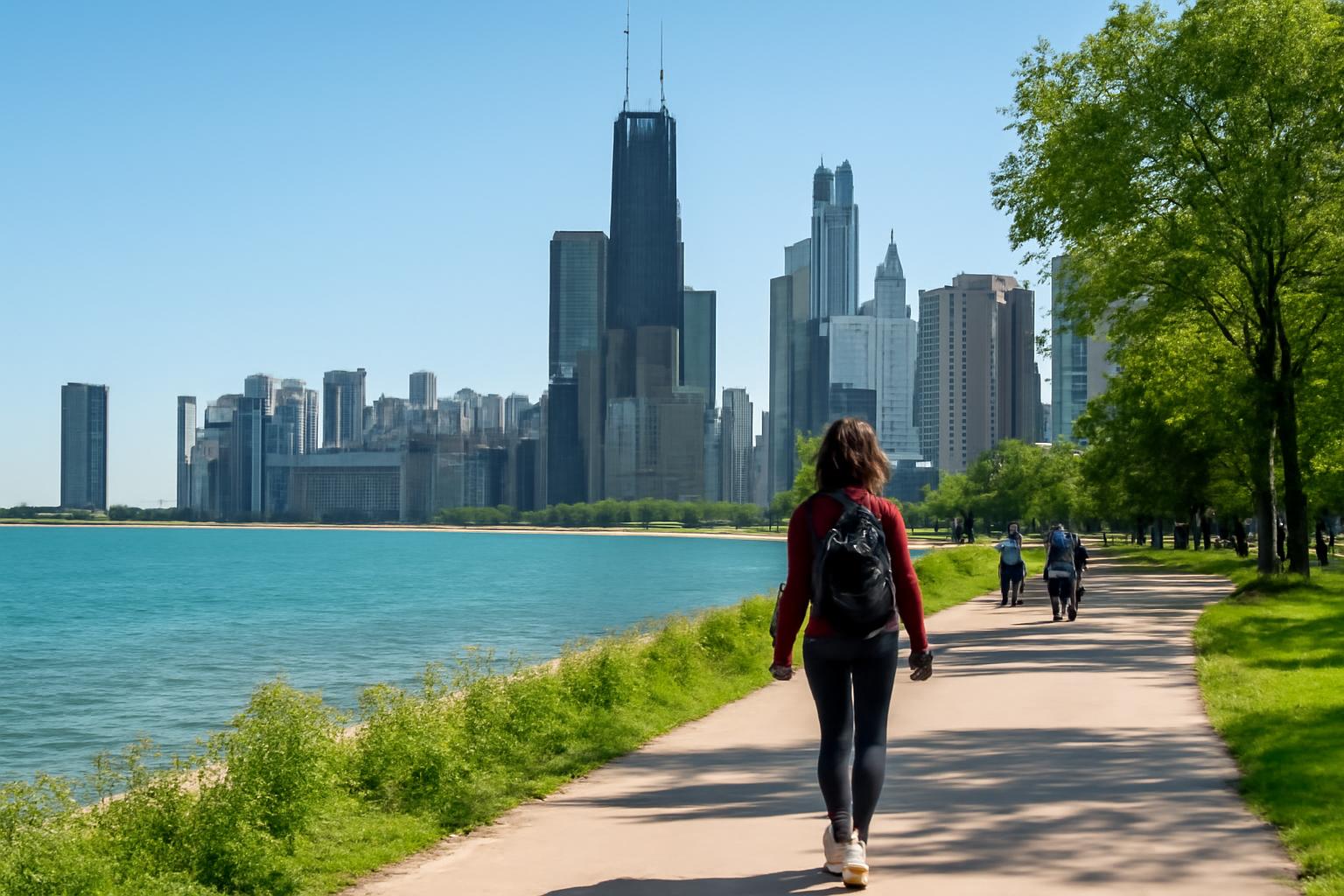
The easiest way to combine the lakefront and downtown without backtracking is to treat the city as a one-way route instead of a loop. Start in the downtown core, move east toward the lake, stay on the path or near the edge for a while, and then return by transit or by a different street if you still want more walking. That keeps the day from turning into a sawtooth of repeated crossings.
If you are not sure which base will make that easier, how to choose a Chicago neighborhood for a first visit is the better starting point. If you want the city center part of the route to feel more architectural, a self-guided Chicago architecture walking day fits naturally with this one.
Choose a direction before you start
Do not begin by wandering toward the lake and then deciding later whether to come back the same way. Decide the direction first. One good pattern is to start downtown, move east to the lakefront, then continue south or north along the edge depending on how much time you have.
That gives the day a beginning, middle, and end. Without that, the route gets messy quickly.
Keep the downtown part compact
The downtown part should be short and purposeful. Use it to connect your hotel, a breakfast stop, and the point where you reach the lake. Once you get to the water, the walk should feel more open and less traffic-heavy.
The whole idea is to save your energy for the parts that make the lakefront feel like a reward rather than an obligation.
Use the lakefront as the long walk
The lakefront should be the longest continuous stretch of the day. That is where you get the open view, the break from the grid, and the sense of distance without needing to cross the whole city. If you want a longer walk, extend it there rather than adding extra downtown zigzags.
That also makes meal planning easier. Eat before the long walk or after it, not in the middle of repeated crossings.
Return by a different mode
If you are trying to avoid backtracking, do not be precious about the return. A CTA ride, a short bus hop, or a cleaner street return can all be better than walking the same blocks in reverse. The point of the day is not to prove you can retrace your steps. The point is to see both downtown and the lakefront in one tidy sequence.
A simple route shape
One practical shape is:
- Start downtown.
- Walk east to the lakefront.
- Continue along the edge for a stretch.
- Stop for lunch or a break.
- Return by transit or a different route.
That is enough for most visitors. It is flexible, easy to repeat, and much less tiring than forcing a perfect loop.
A clean return
Pick a return point before you leave downtown, then use transit or a different street to close the day. A lakefront walk feels better when the return is simple and the route has one clear direction. If the wind rises, shift one segment inland and keep moving. That keeps the day from feeling like two separate trips.
The rule to remember
Walk one way on purpose. If you keep the route directional, the lakefront and downtown stop competing with each other and start feeling like one day.
Why this feels better
The one-way version feels better because it preserves momentum. You are always moving toward the next part of the day instead of questioning whether you already walked that block. That matters more in Chicago than people expect, because the lakefront can tempt you into turning every route into a loop.
One useful trick is to choose a lunch or rest stop near the return point, not in the middle of the day. That keeps the route from drifting back into a second circuit. If the wind picks up, move one segment inland and keep the plan clean.
Once you stop trying to close the shape perfectly, the day opens up. You can spend more time at the water, less time on a repetitive return, and still end up back downtown without feeling like you did the whole thing twice.
Why this feels better
The one-way version feels better because it preserves momentum. You are always moving toward the next part of the day instead of questioning whether you already walked that block. That matters more in Chicago than people expect, because the lakefront can tempt you into turning every route into a loop.
Once you stop trying to close the shape perfectly, the day opens up. You can spend more time at the water, less time on a repetitive return, and still end up back downtown without feeling like you did the whole thing twice.