
18 min read ·
Things to Do in Chicago: Attractions, Neighborhoods, Seasons, and Trip Planning
A third day adds Navy Pier and Lincoln Park. A fourth makes Hyde Park or Oak Park possible without cutting an anchor.
Overview
The strongest things to do in Chicago fall into six categories: architecture experiences on the river and from observation decks, the Loop’s parks and public art, the Museum Campus institutions, the Lake Michigan waterfront, the city’s food neighborhoods, and live music and theater at night. Which ones belong on your shortlist depends on your trip length, who is traveling, and where you base yourself.
That conditional matters because Chicago rewards geographic planning more than list-checking. Most of the popular attractions sit within walking distance of the downtown Loop, which the long-weekend guide at Blogger at Large describes as roughly four square kilometers holding theaters, museums, parks, eateries, and shopping. The local-guide site Quiltripping makes the same point: inexpensive public transportation gets you from the airport to the Loop, and many top attractions are then walkable, with at least four days recommended for a comfortable visit.
This guide works through the choices in decision order: what fits your traveler type, what first-timers should anchor around, how to cluster sights by area, how seasons change the picture, and whether a three-attraction pass saves you money.
Choose the right Chicago experiences for your trip
Start by matching the trip to your priorities, not by collecting attraction names. A weekend visitor with kids should build a different day than a solo traveler focused on art, even though both will pass through the same central blocks.
Use these fits as a first filter:
- First visit: anchor on an architecture river cruise, Millennium Park, and one observation deck. The cruise doubles as orientation, and Choose Chicago leads its own recommendations with the architecture boat cruise and free Millennium Park.
- Traveling with kids: prioritize Navy Pier, the Shedd Aquarium, and the Field Museum. The Travel Expert names Navy Pier as a top choice with kids and the Field Museum as one of the strongest family museums.
- Art and museums: the Art Institute of Chicago holds the top spot on Tripadvisor’s Chicago rankings, and the Griffin Museum of Science and Industry ranks third on the same list.
- Outdoors-focused: walk the Riverwalk, then commit a half day to the 18-mile Lakefront Trail described by The Travel Expert.
- Limited budget: Millennium Park, Lincoln Park Zoo, and Chicago Cultural Center programming cost nothing to enter, per Choose Chicago and Quiltripping.
The sections below expand each of these paths with enough location and booking context to turn a preference into a plan.
First-time Chicago essentials
If this is your first visit, build the trip around three anchors: an architecture river cruise, the Millennium Park and Art Institute block, and one skyline viewpoint. These recur across every source in this guide’s research, and the reason is practical rather than sentimental. They sit close together in the central core, they cover Chicago’s defining strengths (architecture, public art, and a major collection), and they leave your remaining time free for the Museum Campus, Navy Pier, or a neighborhood.
Sequence matters here. The cruise works well early in the trip because it shows you the buildings and geography you will walk past for the rest of your stay. The two subsections below explain how to choose between river-level and elevated views, and which Loop icons to combine on foot.
Architecture cruises and skyline views
Take the river cruise first and treat an observation deck as a complement, not a substitute. They show you different cities. The Shoreline Sightseeing Architecture River Tour listed on the Chicago C3 page is a 75-minute cruise with live narration, which means you get the buildings explained at eye level while the boat handles the routing. The Travel Expert calls the architecture cruise one of the top things to do in Chicago and notes it is included in a CityPASS product, which matters for the pass math later in this guide.
The observation decks give you the opposite perspective: the whole grid at once. Skydeck Chicago’s general admission, per the same CityPASS listing, includes 360-degree views from the 103rd-floor observation deck and The Ledge glass platform. 360 CHICAGO offers panoramic observation-deck views, with the TILT ride sold separately from the pass version. Choose the deck closer to your other plans: Skydeck sits in the Loop, 360 CHICAGO near the Magnificent Mile.
Two planning notes apply to both. First, the cruise is weather-exposed, so schedule it on your most reliable-forecast day and keep a deck as the indoor fallback. Second, the CityPASS Chicago C3 page lists reservations as required for its Skydeck, Shoreline cruise, and 360 CHICAGO selections, so pass users should book these ahead rather than treating them as walk-up decisions; visitors buying general admission separately should check each attraction’s current reservation and walk-up rules.
Millennium Park, the Art Institute, and Loop icons
Give the Millennium Park block a half day and walk it as one continuous route rather than separate stops. Millennium Park itself is free to enter, per Choose Chicago, and Cloud Gate (the reflective sculpture most people call the Bean) is the natural photo stop within it. The park ranks second on Tripadvisor’s list of things to do in Chicago, directly behind the Art Institute of Chicago, which sits on the park’s southern edge.
That adjacency is the point. You can move from the park to the Art Institute’s permanent collection without transit, and the Chicago Riverwalk begins a short walk north on the south bank of the Chicago River, which Tripadvisor describes as an urban space filled with public art and water activities. A sensible first-day route runs park, museum, then Riverwalk toward your dinner plans.
One caution: this guide’s sources do not establish current opening hours or general-admission reservation rules for the Art Institute, so confirm both on the museum’s own site before you fix the day’s order.
Museums and family-friendly attractions
Choose museums by interest and audience rather than trying to see them all, because Chicago’s major institutions each justify several hours. The clearest split is between the Museum Campus, a cluster of three institutions on the lakefront, and the standalone options elsewhere.
For families, the fit guidance in the sources is fairly consistent:
- Shedd Aquarium: Quiltripping calls it the writer’s favorite of the three Museum Campus institutions and one of the best things to do in Chicago with kids, because the exhibits work for short attention spans.
- Field Museum: The Travel Expert names it one of the best Chicago museums for families and dinosaur lovers, and the C3 listing confirms general admission covers the permanent halls and galleries.
- Navy Pier: The Travel Expert ranks visiting Navy Pier among the top things to do in Chicago with kids, and Navy Pier’s own site describes a calendar of kids’ activities, lake cruises, and cultural programs alongside dining and shopping.
- Griffin Museum of Science and Industry: third on Tripadvisor’s Chicago rankings, and the strongest pick for hands-on, exhibit-heavy days, though it sits south of the central core and needs its own travel plan.
For adults traveling without children, invert the priority: the Art Institute first, given its top Tripadvisor position, then the Field or the Griffin depending on whether natural history or science holds more appeal.
Two practical notes shape the family day. First, the Museum Campus institutions sit together, so pairing the Shedd and the Field in one day avoids a second trip; the Adler Planetarium shares the same campus if energy holds. Second, several of these venues appear on the CityPASS reservations-required list (Shedd, Griffin MSI), so a family day at these museums is a booked day, not an improvised one. Navy Pier is the flexible counterweight: per its own site it mixes free public programs with paid attractions, so it absorbs leftover hours better than a timed museum does.
Waterfront and outdoor things to do
Chicago’s waterfront splits into three distinct experiences, and the right one depends on pace: the Riverwalk for a slow urban stroll, the Lakefront Trail for real distance, and Navy Pier for programmed activity. Treating them as interchangeable wastes time, because they point in different directions from downtown.
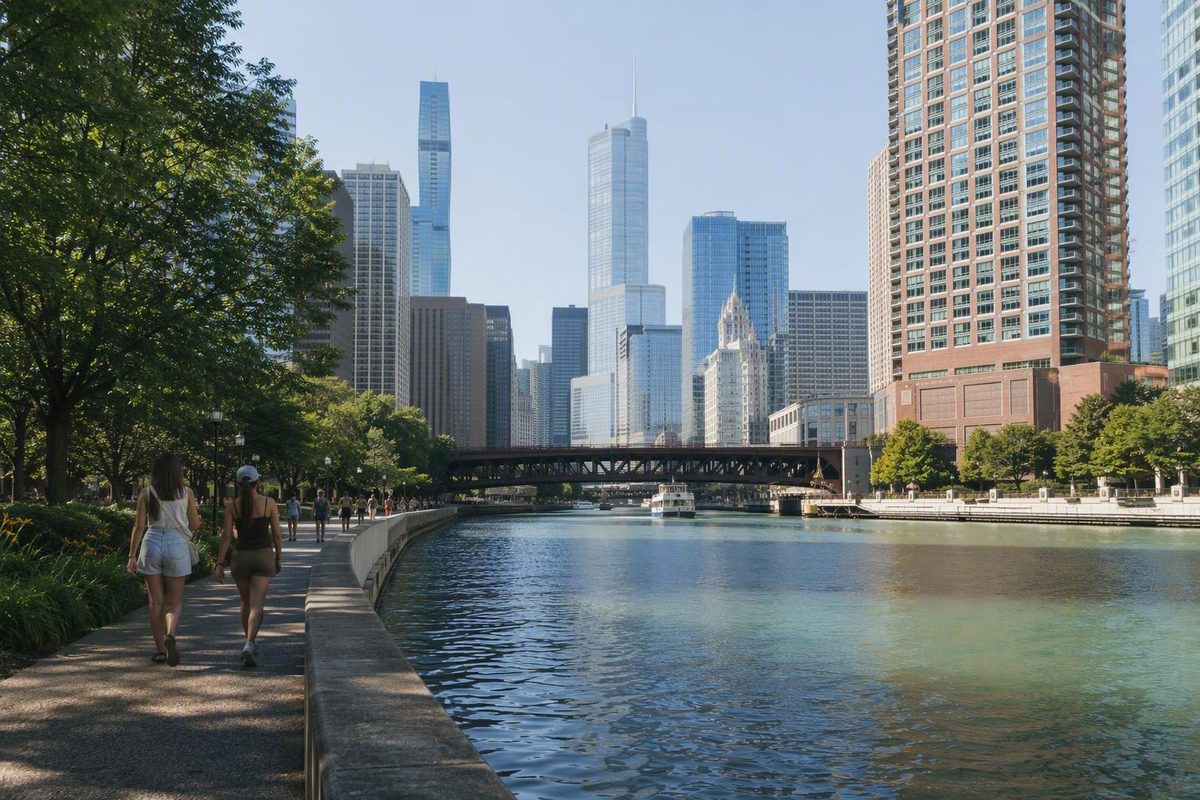
The Chicago Riverwalk is the easiest to slot in. The Travel Expert describes it as a 2-kilometer scenic promenade along the Chicago River, lined with restaurants, bars, public art, and green spaces, and recommends it for your first day in the city. Because it runs along the south bank of the river through the heart of downtown, per Tripadvisor, it connects naturally to the Loop icons and to the docks where architecture cruises depart. Use it as the connective tissue of a central day rather than a destination in itself.
The Lakefront Trail is the commitment option. The Travel Expert puts it at 18 miles along Lake Michigan with skyline and waterfront views the whole way. You will not walk all of it, so pick a segment: the stretch near Lincoln Park works well because the same source describes bike routes that take in the Lakefront Trail and Lincoln Park together, passing through neighborhoods you would otherwise skip, with food and drink stops along the way. Renting a bike converts the trail from a scenic detour into a half-day activity.
Navy Pier is the weather-flexible anchor of the three. Its site lists free fireworks displays through the year, live music, theater, art exhibits, and lake cruises, so it fills an evening or a mixed-weather afternoon. Check the pier’s calendar before you go, because the programming, not the pier itself, determines whether the visit earns its time.
Free and budget-friendly things to do
You can fill a full Chicago day without paying admission, and the free options are strong enough that budget travelers should schedule them deliberately rather than treating them as filler. The key distinction to keep in mind is between free entry and free everything: several venues cost nothing to enter but sell add-ons inside.
The reliable free core looks like this:
- Millennium Park: free to enter, per Choose Chicago, with Cloud Gate and the surrounding public art included.
- Lincoln Park Zoo: free to visit since its founding in 1868, according to Quiltripping, which makes it the rare major-city zoo that costs nothing.
- Chicago Cultural Center: offers many free performances throughout the year, per Quiltripping, and sits in the Loop within walking distance of Millennium Park.
-
Navy Pier public programs: the pier’s own site lists free fireworks and free public programming across the year alongside its paid attractions.
Seasonality tilts this list further in your favor. Choose Chicago’s events page says the city is known for an impressive lineup of free events, particularly in the summer months, concentrated along the lakefront and in Millennium Park.
A workable budget day runs Millennium Park and the Cultural Center in the morning, the Riverwalk at midday, and either Lincoln Park Zoo or a Navy Pier evening program to close. The only spending decisions left are food and any add-on you choose inside a free venue.
Chicago food and evening experiences
Plan your eating the way you plan your sightseeing: one iconic dish as a ritual, then neighborhood dining for the rest. Choose Chicago frames the city’s food around iconic Chicago dishes, from the jibarito to deep dish, and separately recommends eating like a local in the city’s top foodie neighborhoods. That two-part framing is the honest picture. Deep-dish pizza is worth ordering once because it is the dish visitors associate with the city, but treating it as shorthand for Chicago dining undersells the place; notice that Choose Chicago’s own list of icons starts with the jibarito, a Puerto Rican steak sandwich, not pizza. Have the deep-dish meal, then spend your other dinners in a food neighborhood rather than repeating the ritual.
Dining also works better in Chicago as the front half of an evening than as the evening itself. The Riverwalk’s restaurants and bars, per The Travel Expert, put dinner directly on a walking route, and Navy Pier’s site pairs dining with its live music and event programming. Pick the restaurant near your night plan, not the reverse, and you avoid a cross-town transit leg after dark.
Chicago after dark
Live music is Chicago’s strongest evening argument, so make it your default and let the alternatives compete with it. Choose Chicago points to Chicago-born genres including house music, Chicago-style jazz, and amplified blues, and The Travel Expert calls live music in the city’s blues clubs and speakeasies essential for anyone wanting the city’s music scene.
If music is not your night, the supported alternatives sort by mood:
- Theater: the Loop’s four square kilometers include the theater district, per Blogger at Large, so a show pairs naturally with a downtown dinner.
- Skyline at night: an evening observation-deck slot turns a daytime attraction into an after-dark one; reserve it, since the C3 page lists both major decks as reservation-required.
- Events and sports: Choose Chicago’s events calendar covers concerts, sports, and festivals, and checking it for your exact dates beats guessing at what is on.
Whatever you choose, book the anchor (show, deck slot, or club) first and fit dinner around it. The sources here support the categories, not specific venue calendars, so the final booking check is yours.
Worthwhile experiences beyond the Loop
If you have more than two days, spend at least a half day outside the central core, because the Loop-only version of Chicago misses the neighborhoods where the city actually lives. The two best-supported options are Oak Park and the 606, with Lincoln Park and Hyde Park as natural extensions of routes you may already be walking.
Oak Park is the clearest half-day excursion. Quiltripping’s writer spent half a day there and could have filled a full day with additional tours, reaching it by taking the green subway line west to the Oak Park station. The tradeoff is straightforward: you give up central sightseeing hours in exchange for the architecture-focused visit the suburb is known for, and the transit leg means it does not combine well with a Museum Campus day.
The 606 is the lower-commitment neighborhood option. The Travel Expert compares it to New York’s High Line: an elevated trail over 4 kilometers long connecting some of Chicago’s liveliest neighborhoods, open to walkers, joggers, cyclists, and skaters, with parks, sculptures, and murals along the way. It suits a morning when you want movement and street life rather than a ticketed attraction.
Lincoln Park earns its place through the free zoo (free since 1868, per Quiltripping) and its position on the Lakefront Trail, so it extends a lakefront day rather than requiring a separate one. Hyde Park, on the South Side, centers on Jackson Park.
One honest planning caution: the sources here support the destinations, not current transit schedules, parking conditions, or late-evening return options. Before committing to any of these, check live CTA information for your travel day and confirm how you will get back, especially for an evening return from the South or West Side.
Organize sightseeing by area
Group your days by area and you will see more with less transit. The geography cooperates: Quiltripping notes that many of the most popular attractions sit within walking distance once you reach the downtown Loop, and Blogger at Large puts most visitor activity inside the Loop’s roughly four square kilometers. The clusters below are the practical units to plan around.
- Loop and Millennium Park: the Art Institute, Cloud Gate, the Cultural Center, and the theater district, all walkable from one another. This is the default first day.
- Riverwalk and river cruise: the 2-kilometer promenade connects the Loop to the cruise docks, so pair the walk and the boat in one half day.
- Museum Campus: the Shedd, the Field, and the Adler share one lakefront campus, per Quiltripping, so schedule them together and expect a full day if you enter two of the three.
- Magnificent Mile and Navy Pier: shopping, 360 CHICAGO, and the pier’s evening programming sit north of the river and combine into a day that ends with fireworks when the pier’s calendar has them.
- Lincoln Park: the free zoo plus a Lakefront Trail segment, best as a relaxed morning or a bike-day component.
- Hyde Park and Oak Park: each is its own half-day-plus commitment with a transit leg, so give each a dedicated block rather than appending it to a central day.
The tradeoff logic is simple: central clusters tolerate improvisation because everything is close; outlying clusters do not, because the transit cost of a misjudged stop is high. Quiltripping recommends no fewer than four days in the city, and the cluster view explains why. Two days cover the first three clusters, a third adds Navy Pier and Lincoln Park, and the fourth is what makes Hyde Park or Oak Park possible without cutting an anchor. If you have only a weekend, drop the outlying clusters entirely rather than compressing everything.
Seasons and date-specific events
There is no single best season for Chicago; each one changes what the city offers, so match your dates to the version of the trip you want. The honest framing is a tradeoff between outdoor programming and indoor depth.
Summer is peak festival season. Choose Chicago’s events page describes the city coming alive with outdoor concerts, neighborhood street fests, and major events including Lollapalooza, Taste of Chicago, and the Chicago Air and Water Show, with something new nearly every weekend, especially along the lakefront and in Millennium Park. The same source notes Chicago is known for free events particularly in the summer months, which strengthens the budget case for a June-through-August visit. The costs are crowds and competition for reservations at the timed attractions.
Winter trades the lakefront for tradition and indoor culture. Choose Chicago points to ZooLights and Christkindlmarket as holiday staples, plus Lunar New Year celebrations, Chicago Restaurant Week, and Chicago Theatre Week. A winter trip weights your plan toward the museums, the Art Institute, observation decks, and theater, all of which work regardless of weather, and the free zoo becomes an evening event rather than an afternoon stroll during ZooLights.
Spring and fall sit between the two: fewer marquee festivals in the supplied sources, but the walking-heavy clusters (Riverwalk, Lakefront Trail, the 606) become more comfortable than in either extreme season.
Whatever your dates, check Choose Chicago’s current events calendar before locking the plan. Festivals reshape hotel demand, lakefront access, and which evenings need bookings, and no static guide can substitute for the calendar covering your actual week.
Plan reservations, prices, and access
Before you finalize the shortlist, run it through four practical checks: which attractions require timed reservations, what current prices and age bands apply, whether any component is temporarily closed, and whether the venue meets your access needs. The weekend-trip guide at The Traveling Wildflower captures the core habit: buy tickets days in advance and book the earliest time slot you can, which both secures entry and puts you ahead of midday crowds.
One scope note applies to everything below: the verified details in this guide cover the Chicago C3 pass listings and Skydeck’s published accessibility information. For every other venue, treat the guidance as a checklist of what to confirm, not as confirmed fact.
Reservations and changing visitor details
The clearest supported reservation list comes from the CityPASS Chicago C3 page, which as of its July 2026 listing states that reservations are required at Shedd Aquarium, Skydeck Chicago, the Shoreline Sightseeing Architecture River Tour, 360 CHICago Observation Deck, and the Griffin Museum of Science and Industry, managed through the My CityPASS app after purchase.
One conflict is worth flagging rather than resolving. A Chicago CityPASS guide last checked on 7 May 2026 describes Shedd reservations as recommended rather than required, while the C3 page itself lists Shedd as reservations-required. The two sources may describe different products or different dates. The safe move is to reserve Shedd regardless, or confirm the current rule directly with the aquarium.
Prices and definitions also move. The C3 page notes box office prices vary by date and time (its Skydeck example is approximately $36 to $49 for adults), and it defines its own age bands as adult 12 and up and child 3 to 11, with ages 2 and under free at several attractions. Other venues may define children differently.
Before you book, verify these directly with each venue:
- Current opening hours and any temporary closures for your dates
- Whether general admission (outside any pass) requires a timed reservation
- The live price for your specific date and time
- The venue’s own child, senior, and free-age definitions
Ten minutes of checking official pages prevents the most common short-trip failure, arriving at a sold-out timed attraction.
Accessibility and stroller planning
Skydeck Chicago is the one venue in this guide with detailed published accessibility information, and it sets a useful benchmark. Per Skydeck’s accessibility page, the attraction is completely accessible and ADA compliant, set up for strollers, scooters, and wheelchairs, with ramps for wheelchair access and an elevator that accommodates wheelchairs and scooters. The Ledge glass platform is also accessible, complimentary wheelchairs are available on a first-come, first-served basis, optional sensory bypasses exist in the more stimulating exhibits, and service animals are permitted, with additional assistance available via sales@theskydeck.com.
Do not generalize those provisions to other venues. The sources in this guide do not document accessibility at the Art Institute, the Museum Campus institutions, Navy Pier, or the river cruises, so apply the Skydeck page as a template for what to ask each venue directly: whether the full visitor route is step-free, whether wheelchairs are loaned and on what terms, whether sensory accommodations or quiet options exist, what the service-animal policy is, and whether strollers are permitted throughout or must be checked. Boat tours deserve particular attention, since boarding conditions vary in ways a museum entrance does not. One email per venue before booking is a small cost against the risk of an unusable ticket.
Is a Chicago attraction pass worth it?
For most first-time visitors planning three of the big-ticket attractions, the Chicago C3 pass is worth pricing out, and for the most expensive combinations it clearly wins. The CityPASS Chicago C3 page lists the pass at $109.00 for adults (ages 12 and up) and $79.00 for children (ages 3 to 11), against a stated regular price of $157.95 adult and $110.20 child, a saving CityPASS states as up to $48.95 (31%) for adults. All figures below come from that page as listed in July 2026 and can change, so confirm before buying.
The same page lists individual admissions: Shedd Aquarium $54.95 adult, Skydeck Chicago $49.00, the Shoreline Architecture River Tour $54.00, 360 CHICAGO $38.00, and the Field Museum $30.00. Using those inputs, the arithmetic for three sample adult combinations works out as follows.
| Three-attraction combination (adult) | Individual total | C3 price | Outcome |
|---|---|---|---|
| Shedd ($54.95) + Skydeck ($49.00) + Shoreline cruise ($54.00) | $54.95 + $49.00 + $54.00 = $157.95 | $109.00 | Pass saves $48.95 |
| Skydeck ($49.00) + Shoreline cruise ($54.00) + 360 CHICAGO ($38.00) | $49.00 + $54.00 + $38.00 = $141.00 | $109.00 | Pass saves $32.00 |
| Skydeck ($49.00) + 360 CHICAGO ($38.00) + Field Museum ($30.00) | $49.00 + $38.00 + $30.00 = $117.00 | $109.00 | Pass saves $8.00 |
The pattern is clear: the pass pays off decisively when your three picks include the expensive water-and-views trio, and only marginally when cheaper museums replace them. Note that these calculations use only prices published on the C3 page; the excerpt does not list individual Art Institute or Adler Planetarium prices, so price those combinations yourself before deciding.
Non-price factors matter too. The C3 listing includes some extras within admission, such as Shedd’s all-access exhibits and seasonal Stingray Touch, but excludes others, such as the TILT ride at 360 CHICAGO. Five of the pass attractions require reservations through the My CityPASS app, so the pass commits you to some scheduling. If your list runs to five attractions including Shedd and Skydeck, the fuller Chicago CityPASS, priced at $144 adult as of a 7 May 2026 check by chicagoobservationdeck.com, may fit better than C3. Either way, run your own three picks through the table’s method before you pay.