
5 min read ·
Walk Horner Park From Montrose to the River and Back
Plan a 60–90-minute walk through Horner Park in Chicago, with river trails, South Woods nature play, CTA directions and an optional 312 RiverRun extension.
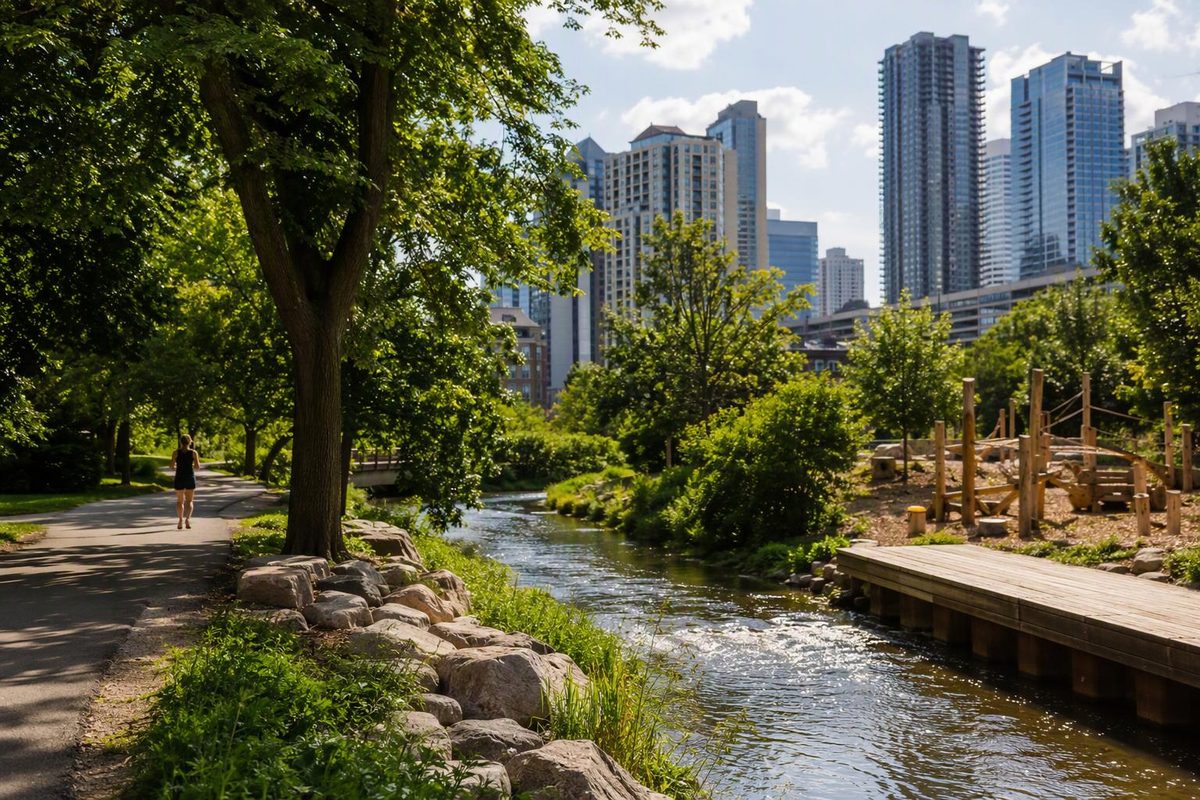
Horner Park in Chicago is a good choice for a 60–90-minute neighborhood park walk, with river trails, a nature play space and a return route through open recreation areas. Start at Montrose and California, walk east toward the river, follow the natural area south, then return through the park. The nearly 58-acre park’s main address is 2741 W. Montrose Avenue, in Irving Park. Plan the river portion for daylight: the natural area closes at dusk, earlier than the general park. Chicago Park District park details
The suggested time excludes transit and does not require covering every trail. With children, allow additional time for South Woods rather than trying to fit the nature play space into a brisk loop.
Choose your daylight, trail conditions and walking party; the tool recommends which part of Horner Park to use.
Choose Your Horner Park Route
Choose the River-and-Park Loop
Start at Montrose and California, head east to the river, follow designated trails south, then return north through the general park.
Suggested park time: 60–90 minutes, excluding transit.
The approximately 1.3 miles refers to the whole mulch trail network, not this loop. River-edge steps are optional.
Rules Behind the Recommendation
| Condition | Route Decision |
|---|---|
| Dusk or later | No natural-area trails. General park hours: 6 a.m.–11 p.m. |
| Wet trails | Skip natural-area trails; do not use surfaces retaining footprints. |
| With children | Allow extra time for South Woods nature play. |
| With a dog | No natural-area trails. The separate dog-friendly area requires a DFA permit and tag. |
| Recreational cycling | Use the designated multi-use route, not the natural-area trails. |
| Mobility device | Welcome in natural areas for people with physical limitations; trail suitability is not established. |
| Unknown conditions | Check daylight and footing before committing to the natural area. |
Sources: Chicago Park District natural-area details and rules; suggested walk time is an editorial estimate, not a measured journey.
The River Trails Close Earlier Than the Park
The Park District lists Horner Park’s general hours as 6 a.m.–11 p.m., but the natural area opens only from dawn to dusk. An evening visit to the park does not mean the river trails remain open.
The natural area follows the river between Montrose Avenue and Irving Park Road, then continues west along Irving Park toward California. It contains savanna, prairie and riverside habitat, with approximately 1.3 miles of mulch trails in total. That is the trail network’s length, not a measured distance for the suggested loop. Flagstone steps provide access to views at the river’s edge. Natural-area description and hours
Do not expect a paved riverside promenade. If you need firm footing, assess the mulch surface before committing and skip the optional steps. The available information does not establish a fully accessible route through this trail network.
After rain, avoid trails soft enough to retain footprints. The Park District asks visitors not to use wet trails and to stay on designated paths. Pets and recreational cycling are also prohibited within natural areas; mobility devices used by people with physical limitations are welcome. Permission to use a mobility device does not establish that every trail surface will suit it. Natural-area rules
Start at Montrose, Walk South and Return Through the Park
Pause at the Henry Horner Monument
Use Montrose and California as your meeting point. Before heading east, look for the red granite Henry Horner monument in the northwest corner.
Its Art Deco relief was carved by John David Brcin in 1948 and moved here from Grant Park in 1956. Horner was Illinois’ first Jewish governor. This is a brief history stop on the walk, not a separate attraction to schedule; the Park District’s park page provides the monument’s history.
Follow the Designated River Trails South
Make your way east toward the river side of the park, then follow designated natural-area trails south toward Irving Park Road. Choose how much of the network to cover according to your time, daylight and footing.
Shoreline restoration began in 2013, replacing invasive growth with native wildflowers, shrubs and trees while addressing erosion. The restored landscape is the main reason to choose this portion over simply circling the ballfields. The Park District’s natural-area page describes the restoration and trails.
The river-edge steps are optional. You do not need to descend them to make this a worthwhile park walk, and you should not leave designated trails to find another approach to the water.
Leave Time for South Woods Nature Play
At the southern end of the outing, turn west toward South Woods for the Horner Park Nature Play Space.
The Park District describes giant cedar robots made in the park’s wood shop, a stage, a log council ring and a climbable log tangle. It is a different option from the park’s conventional playground: children may want time to explore rather than make a quick stop before the return walk. Nature play space
Return to Montrose or Leave From Irving Park Road
For the loop, head back toward California Avenue and north to Montrose using general park paths. This puts the sports fields, picnic groves and other open recreation areas on your return instead of retracing the river trails.
If you prefer to finish at the south end, the #80 Irving Park bus stops at Irving Park and California in both directions. Eastbound service connects with the Irving Park Brown Line station; westbound service connects with the Irving Park Blue Line station.
The eastbound stop is across Irving Park Road on the southeast corner. Use the signalized crossing rather than treating the bus stop as a direct continuation of the park path. CTA #80 stop list
Reach the North Entrance by Brown Line and Bus
From downtown, a straightforward approach is a Kimball-bound Brown Line train to Montrose, followed by the westbound #78 Montrose bus to California.
Montrose station is at 1817 W. Montrose Avenue and connects with the #78. The westbound California stop is on the northwest corner of the intersection; cross at the signal to reach the park south of Montrose. Montrose station
For the return from the north end, take the eastbound #78 from the southeast corner back to Montrose station, then a Loop-bound train. CTA #78 stop list
Check current CTA schedules and service alerts before leaving. The suggested 60–90 minutes is time in the park, not a downtown-to-downtown trip estimate; no transit duration or guaranteed bus wait is established here.
Use 312 RiverRun for a Longer Walk or Cycling
For more walking, continue south on the 312 RiverRun connection under Irving Park Road, toward California Park and the Riverview Bridge.
The completed corridor links Horner, California and Clark parks, with underpasses that avoid street-level crossings of Irving Park Road and Addison Street. Treat this as an extension with its own return plan, not part of the short Horner Park loop. No extension distance or duration is established here. City description of the completed connection
The multi-use corridor and the natural-area trails are not interchangeable. For recreational cycling, use the designated multi-use route rather than the mulch trail network. The natural-area cycling prohibition does not describe the rules for the entire RiverRun corridor.
Keep Dogs Out of the Natural Area
If you are bringing a dog, do not use the river-trail itinerary through the natural area. Horner has a separate off-leash dog-friendly area, which is a different destination from the restored river habitat. Horner dog-friendly area
Each dog using a Park District dog-friendly area needs a DFA permit and tag issued by a participating veterinarian. Having that permit does not allow a dog into Horner’s natural area. DFA requirements
If your day is still centered on downtown or the lakefront, compare Chicago parks by type of outing before adding the trip north. Horner is best suited to a day when the neighborhood park walk itself is the destination.