
5 min read ·
See Downtown Chicago Without Wasting Steps
Plan a no-backtracking downtown Chicago day linking Willis Tower, the Art Institute, Millennium Park, the Cultural Center and Riverwalk on a practical route.
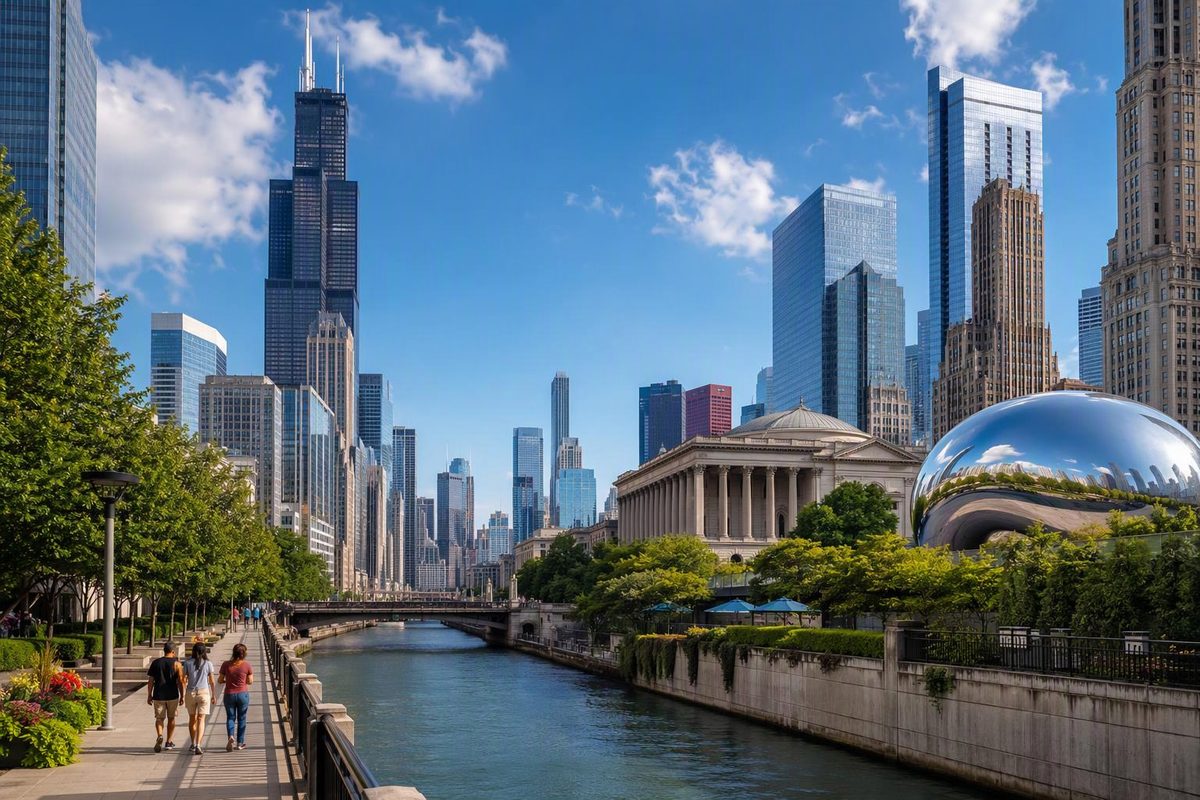
The most efficient route through Chicago’s downtown attractions runs from Willis Tower in the southwest Loop toward Michigan Avenue and the Chicago River. The core walk is about two miles before any Riverwalk extension, connecting Willis Tower, the Art Institute, Millennium Park, the Chicago Cultural Center and the river without repeated crossings.
For a comfortable day, choose one main ticketed attraction—Skydeck, the Art Institute or an architecture cruise—then use the free parks, public buildings and architecture to connect it. Trying to fit all three ticketed attractions into one day leaves little flexibility for meals, lines or weather.
Choose your main attraction and visiting day; the planner builds the practical stop order.
Art Institute Route
4 hr 30 min–7 hr$32 adult museum admission, plus lunch
On-site time only; walking, queues and transit are not included.
Recommended Stop Order
| Stop | Time | Cost |
|---|---|---|
| Art Institute | 2–3 hr | $32 adult |
| Lunch | 45–60 min | Varies |
| Millennium Park | 30–45 min | Free |
| Cultural Center | 30–45 min | Free |
| Riverwalk | 45–90 min | Free |
Source: Visit times, prices, hours and cruise check-in requirements come from the attraction operators and City of Chicago pages cited in the article. Totals add stated visit ranges; walking and waits are unknown.
Start At Willis Tower Only For Skyline Views
Skydeck occupies the 103rd floor of Willis Tower at 233 S. Wacker Drive, with its entrance on Jackson Boulevard. General admission includes the museum, observation deck and Ledge. Adult tickets start at $32, with prices varying by date and time.
The operator recommends buying in advance and arriving 15 minutes before the reservation. Time slots can sell out, and most visits take 45–60 minutes (Skydeck Chicago).
This is the easiest major stop to remove. Skipping it saves the ticket cost and about an hour without creating a gap in the walking route. If skyline views are a priority, reserve a morning time and then walk east toward the Art Institute.
Make The Art Institute Your Main Indoor Stop
Use the Art Institute’s Michigan Avenue entrance at 111 S. Michigan Avenue. Public hours are 11 a.m.–5 p.m. Monday and Wednesday, 11 a.m.–8 p.m. Thursday, and 11 a.m.–5 p.m. Friday through Sunday. The museum is closed Tuesday. General adult admission is $32 (Art Institute of Chicago).
Allow two hours for a selective highlights visit. Three hours is more realistic when the museum is the day’s priority. The museum also publishes a mobile “What to See in an Hour” route, which can help when a later cruise reservation limits the visit.
If art is not a priority, skip the museum rather than rushing through it. Begin at the Cultural Center after 10 a.m., cross into Millennium Park and continue north to the river.
Walk North Through Millennium Park
From the Art Institute, continue north on Michigan Avenue. A compact first visit to Millennium Park can include Cloud Gate, the Jay Pritzker Pavilion and Lurie Garden without requiring a circuit of the entire park.
The park is free and open daily from 6 a.m. to 11 p.m. The city’s construction notice says Lurie Garden remains open, but its south walkway is closed. Lower-level restrooms beside the Pritzker Pavilion are also closed during construction; restrooms in the Park Shop building remain available during park hours (City of Chicago). Construction and event access can change, so check the notice shortly before visiting.
Allow 30–45 minutes for the principal sights. If the lakefront matters more than the Loop’s western attractions, use this downtown and lakefront route instead.
Cross Michigan Avenue For The Cultural Center
The Chicago Cultural Center stands directly across from Millennium Park at 78 E. Washington Street. It adds an indoor architecture stop without a meaningful detour.
Admission is free, no ticket is required, and current hours are 10 a.m.–5 p.m. daily. Galleries begin closing 15 minutes before the building (City of Chicago).
See Preston Bradley Hall and its Tiffany glass dome, then check whichever exhibition rooms are open. The building has wheelchair-accessible restrooms, water fountains, bottle fillers and seating, making it a useful rest point between the museum and river.
Free building tours are currently offered at 1:15 p.m. Thursdays and Fridays. Build around a tour only when that time fits naturally; a self-guided 30–45 minute visit keeps the day more flexible.
Finish On The Chicago Riverwalk
Continue north on Michigan Avenue to the river. At river level, walk west for the denser corridor of Loop architecture or east if the lakefront is your endpoint.
The city describes the Riverwalk as a continuous 1.25-mile path from Lake Street to the lakefront. It is free and open from 6 a.m. to 11 p.m. (Chicago Riverwalk). Vendor schedules are separate, so cafés and seasonal concessions may not match the path’s operating hours.
For a short finish, walk west from Michigan Avenue toward State or Clark Street. State/Lake and Clark/Lake stations provide several CTA options for leaving downtown. Allow 45–90 minutes depending on how far you walk and whether you stop along the river.
Add An Architecture Cruise Only With A Reservation
The Chicago Architecture Center’s First Lady dock is at the southeast corner of the Michigan Avenue Bridge and Wacker Drive, where this walking route reaches the river.
The cruise lasts 90 minutes and departs multiple times daily from March through November. Passengers should reach the dock at least 30 minutes before departure. Advance booking is recommended because popular sailings can sell out (Chicago Architecture Center).
Work backward from the required arrival time instead of hoping to fit the cruise in after the museum. Taking both the Art Institute and a cruise creates a full day even before meals, walking and possible lines. If both matter, keep the museum visit focused and let the cruise check-in time control the schedule.
The usual dock entrance involves stairs. The operator identifies a step-free route using the ramp from Wacker Drive at State Street; review its accessibility directions before the visit if stairs are a concern.
Add Navy Pier Only For A Lakefront Priority
Navy Pier does not belong in the compact Loop route. Add it when the lakefront, Centennial Wheel or a pier event is more important than one of the western stops.
Entry to the pier is free, but individual attractions charge separately. Hours vary seasonally, and ride operations can change with weather (Navy Pier).
To avoid backtracking, continue east after reaching the river and omit Skydeck or the Art Institute. Otherwise, finish on the Riverwalk rather than extending the day to the pier.
Adjust The Route For Cost, Weather Or Walking
For a free day, begin at the Cultural Center, cross to Millennium Park and finish on the Riverwalk. Extend south to Buckingham Fountain when weather and daylight permit.
On a rainy day, prioritize the Art Institute and Cultural Center, then use the Riverwalk for a short segment between showers. Millennium Park remains directly on the route, so it can be added when conditions improve.
For an architecture-first day, skip Skydeck and the museum, follow a self-guided Chicago architecture walking plan, then finish with a reserved cruise.
For a lower-walking day, choose one indoor anchor plus Millennium Park. Stay on Upper Wacker to view the river if the ramps and grade changes of the Riverwalk do not suit your group.
The ticketed attraction should determine the schedule. Once that reservation or museum visit is fixed, the free central sights fall into a clear southwest-to-northeast route.