
25 min read ·
A Smarter Weekend Route Through Chicago’s Art, Architecture, River, and Lakefront
Fit the Loop, Millennium Park, one major museum, the river corridor, an architecture experience, several meals and one optional evening or afternoon module.
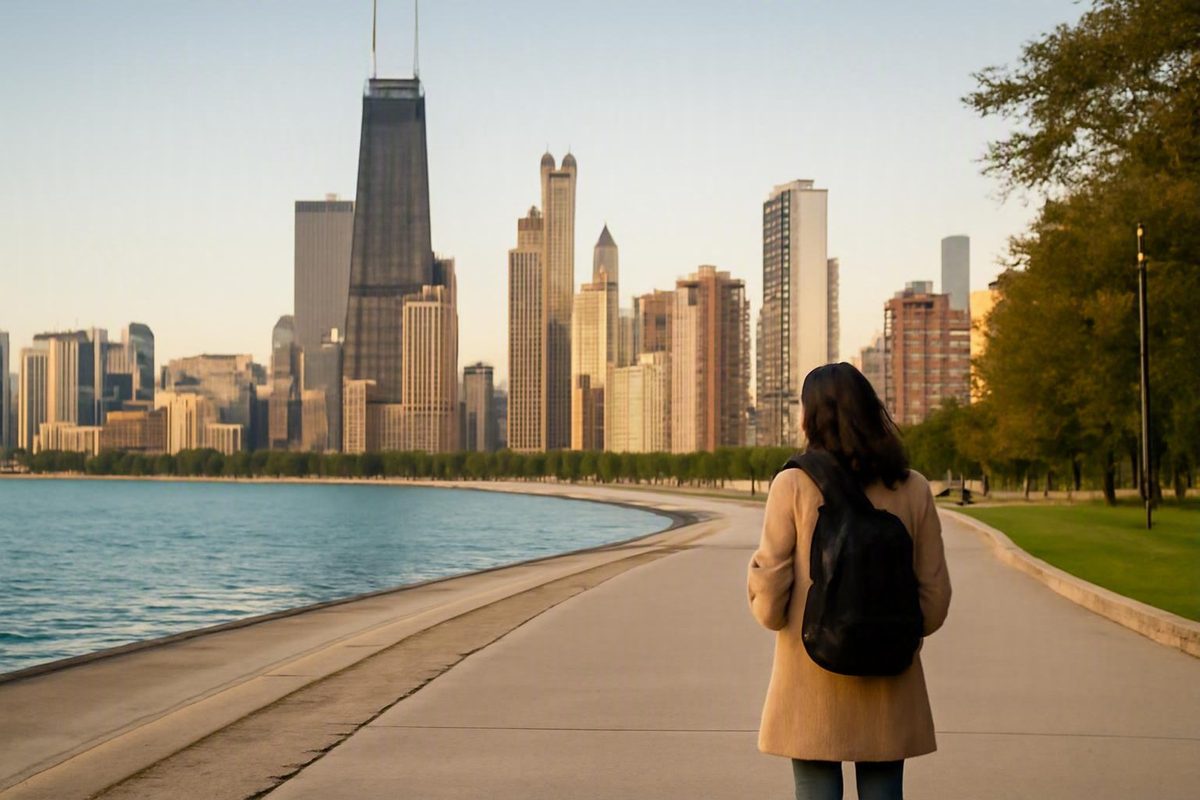
- A smarter weekend route through Chicago’s art, architecture, river, and lakefront
A successful 36 hours in Chicago should feel connected, not exhaustive. The goal is to understand the city through a few strong experiences—art, architecture, food, the river, and the lakefront—without spending the weekend crossing town or racing between reservations.
This sample itinerary begins in downtown Chicago at 9 a.m. Saturday and ends when you leave downtown at 9 p.m. Sunday. The 9 p.m. endpoint is not a suggested flight or train departure time. Airport, rail-station, parking, security, baggage, and check-in requirements fall outside this window and must be calculated separately using current guidance from your carrier, departure facility, and transport provider.
The route concentrates on the Loop, river corridor, River North, and nearby lakefront. It follows one governing rule: schedule no more than one substantial paid attraction per half-day. Parks, meals, public interiors, landmarks, and walks fill the space around those priorities.
All times below are illustrative planning blocks, not verified operating hours or guaranteed travel times. Before traveling, replace them with current attraction hours, ticket conditions, cruise instructions, transit information, accessibility details, weather alerts, and departure requirements for your dates.
The 36-hour plan at a glance: assumptions, route, and trade-offs
The clock starts after you have reached downtown. It does not begin when your plane lands, your train arrives outside the central area, or your car reaches the edge of Chicago.
If you cannot reach your downtown base until noon, do not squeeze the entire Saturday morning into one rushed hour. Start with lunch or the Art Institute, preserve the geographic sequence, and treat the Cultural Center or Millennium Park as a later flexible stop.
| Sample time | Area | Main plan | What can change |
|---|---|---|---|
| Saturday, 9–10 a.m. | Hotel base | Bag drop and breakfast | Absorbs late arrival |
| Saturday, 10–11:30 a.m. | Loop | Millennium Park and Chicago Cultural Center | Shorten either stop |
| Saturday, 11:30 a.m.–12:30 p.m. | Loop | Lunch | Restaurant and meal length |
| Saturday, 12:30–3:30 p.m. | Loop | Art Institute | Visit selected galleries |
| Saturday, 3:30–4:30 p.m. | Loop or hotel | Rest and delay buffer | Coffee, walk, or check-in |
| Saturday evening | Loop or River North | One skyline or cultural experience | Dinner placed nearby |
| Sunday, 8–9 a.m. | Hotel or river area | Breakfast | Determined by cruise location |
| Sunday, 9–9:30 a.m. | River corridor | Walk and check-in allowance | Follow operator instructions |
| Sunday, 10–11:30 a.m. | River corridor | Illustrative cruise block | Replace with booked duration |
| Sunday, 11:30 a.m.–12:15 p.m. | Riverwalk | Short continuation | Weather-dependent |
| Sunday, 12:15–1:30 p.m. | River North or river corridor | Lunch | Flexible |
| Sunday, 1:30–5:30 p.m. | One selected area | Final afternoon module | First block to cut |
| Sunday, 5:30–7 p.m. | Downtown base | Return and collect luggage | May need to begin earlier |
| Sunday, 7–9 p.m. | Downtown | Simple meal and departure preparation | Leave earlier if required |
The Sunday cruise block uses a reported 90-minute architecture-tour format only to make the sample schedule readable; cruise lengths, boarding times, departure points, seasons, and policies vary. Your operator’s current confirmation replaces the sample time (see the downtown 36-hour account).
The core sequence is deliberate:
- Saturday: the Loop, Millennium Park, Chicago Cultural Center, and the Art Institute.
- Sunday morning: the Chicago River, architecture, the Riverwalk, and River North.
- Sunday afternoon: one waterfront, family, museum, or neighborhood extension.
Several short-trip itineraries concentrate on downtown and adjacent areas rather than attempting a citywide survey. That does not make the route literally free of transfers. A Museum Campus visit, neighborhood excursion, or return to stored luggage can require backtracking. The promise is therefore practical rather than absolute: minimize unnecessary crossings, keep each half-day geographically coherent, and avoid choosing meals or attractions that pull you away from the next major stop.
The Art Institute and an architecture cruise can both fit when Saturday begins on time and you accept a moderately active weekend. If you prefer long meals, frequent rests, detailed museum visits, or a slower pace, make one the trip’s defining experience and treat the other as optional.
Millennium Park, the Cultural Center, the Riverwalk, meals, and unticketed skyline walks remain flexible. They can expand, contract, or disappear without creating a chain of missed reservations.
Before the clock starts: where to stay, what to reserve, and what to verify
For this route, the Loop and River North are practical base areas. This is a location recommendation, not a hotel endorsement. Either can reduce transfers among the central park-and-museum cluster, the river, Michigan Avenue, restaurants, and evening activities. Chicago Know’s first-visit neighborhood comparison can help match a base with your preferred pace and interests.
A Loop base is especially convenient for Saturday’s attractions, theater-district events, and some downtown rail departures. River North can work better for river access, Michigan Avenue, dining, and a north-of-the-river observation deck. Neither location eliminates the need to check your exact hotel, attraction entrance, station, or cruise dock.
Do not assume your room will be ready in the morning. Ask the hotel whether it offers bag storage before check-in and after checkout, whether fees or restrictions apply, and when bags must be collected. If it cannot hold luggage, investigate a verified provider near the hotel, arrival point, or departure route.
Reserve in advance anything whose loss would materially diminish the trip:
- An architecture cruise
- Timed museum admission
- An observation deck
- A theater, dance, or music performance
- A particular event
- A restaurant the group considers essential
Advance booking should protect priorities, not turn every hour into a deadline.
If the Art Institute is essential, decide what you most want to see before arriving. Select a few collections, artists, periods, or galleries rather than trying to cover the entire museum. Save any current visitor-planning information the museum provides and check whether a temporary exhibition requires separate admission.
Walking and CTA rail can support a downtown-centered weekend at a general level. A taxi or rideshare may be more practical with luggage, in uncomfortable weather, or when mobility needs make a transfer difficult. Current fares, schedules, service changes, station conditions, elevator status, and travel times require official confirmation.
The same applies to arrivals. This article does not estimate transfers from O’Hare, Midway, Union Station, another terminal, or a parking facility. Calculate the journey to your hotel before treating 9 a.m. as a realistic sightseeing start.
Pre-trip verification checklist
- [ ] Hotel bag-storage policy before check-in and after checkout
- [ ] Opening hours for every priority attraction
- [ ] Timed-entry requirements and ticket-change rules
- [ ] Cruise operator and exact departure point
- [ ] Cruise check-in, boarding, weather, and cancellation instructions
- [ ] Theater, music, or event start time
- [ ] Restaurant hours, reservation status, and dietary suitability
- [ ] CTA service relevant to the route
- [ ] Station and elevator notices where accessibility depends on them
- [ ] Step-free entrances, seating, restrooms, and mobility-device policies
- [ ] Weather, wind, heat, cold, and air-quality alerts
- [ ] Current access to Cloud Gate and other park features
- [ ] Construction, maintenance, private events, or seasonal restrictions
- [ ] Luggage collection deadline
- [ ] Official carrier and facility guidance for the final departure
- [ ] Time needed to travel from downtown to the airport, station, or vehicle
Cloud Gate has been affected by maintenance during a previous family visit, but that past condition does not establish its present status. Seasonal events, fountains, skating, concerts, cruises, rides, and waterfront attractions likewise should not be assumed to operate on a particular date.
Saturday, 9 a.m.–4:30 p.m.: a compact Loop route for parks, public interiors, and art
Saturday remains within one central cluster. This prevents a common short-trip problem: reaching downtown, immediately traveling to a distant attraction, and then returning to the Loop for lunch or dinner.
9–10 a.m.: luggage drop and breakfast
Go first to your hotel or confirmed storage location. Leave your bags, establish the later check-in or collection procedure, and eat nearby.
This hour is intentionally modest. It can absorb a late arrival, slow transfer, parking problem, or storage delay without sacrificing a paid attraction. It does not depend on early access to your room.
Choose breakfast by opening time, location, dish, budget, dietary fit, and likely meal length. A celebrated restaurant is a poor first stop if reaching it consumes the park-and-Cultural Center block. Chicago Know’s breakfast guide uses this conditional approach rather than forcing one citywide winner.
10–10:45 a.m.: Millennium Park
Treat Millennium Park as an orientation walk rather than a half-day attraction. Depending on access and current operations, possible priorities include:
- Cloud Gate
- Crown Fountain
- The central landscape and public art
- Exterior architecture
- Views toward the surrounding skyline
Cloud Gate is in Millennium Park, while the Art Institute is adjacent to the park, making them logical parts of the same route. Confirm access to individual features before relying on them.
Allow more time if photography matters or children want to linger. Otherwise, use the park to understand the relationship among Michigan Avenue, public art, downtown architecture, and the lakeward edge of the central city.
10:45–11:30 a.m.: Chicago Cultural Center
When open, the Chicago Cultural Center supplies a nearby indoor complement to the park. Look at the building itself, including the Tiffany glass dome, and review the current calendar for public programming.
An official downtown itinerary also sequences the Art Institute, Millennium Park, and Cultural Center as a central cluster, while presenting Museum Campus and river architecture as later alternatives rather than automatic additions (review the downtown itinerary).
The Cultural Center is flexible. Shorten or remove it if the morning begins late or current hours do not fit. In unpleasant weather, it can become the morning’s principal non-museum interior, provided access has been confirmed.
11:30 a.m.–12:30 p.m.: Loop lunch
Eat within the Loop instead of crossing the city for a restaurant made famous by a list or social-media post.
Choose according to:
- Desired dish or cuisine
- Budget
- Dietary requirements
- Reservation needs
- Current hours
- Distance from the museum
- Quick service versus a seated break
Lunch does not need to be the weekend’s most elaborate meal. Its purpose is to restore energy without making you watch the clock through the museum.
12:30–3:30 p.m.: Art Institute of Chicago
Make the Art Institute Saturday’s substantial attraction. Begin with your preselected priorities and add nearby galleries only if interest and energy remain.
A focused shortlist could include:
- One period or school of painting
- One artist or related group
- One decorative-arts or design section
- One modern or contemporary area
- One current temporary exhibition, if available and included
The three-hour block is an editorial planning allowance, not a claim about how long every visitor needs. A specialist might want much longer; a family or museum-cautious traveler may prefer less.
Do not try to “finish” the museum. Large collections reward selection, and leaving before fatigue sets in can produce a more memorable visit than racing through distant galleries.
The principal efficiency gain is geographic: the park, Cultural Center, lunch, and museum create variety without requiring a major transfer.
3:30–4:30 p.m.: recovery and delay buffer
Protect this hour. Use it to:
- Return to the hotel and complete check-in.
- Rest, shower, or change.
- Have coffee or take a short walk.
- Absorb delays from the morning or museum.
This buffer is what keeps the evening usable. Removing it may add another landmark, but it can also make dinner, a performance, or Sunday’s early start less enjoyable.
Relaxed Saturday alternative
Skip the Art Institute and extend the park and Cultural Center visits. Have a slower lunch, look at selected Loop architecture, and preserve a long hotel break.
If architecture is the central interest, the cruise can move to Saturday afternoon only when the operator’s current departure time, check-in requirements, dock, duration, and weather policy fit the route. Do not assume different operators use the same schedule or departure point.
Saturday evening: choose one skyline or cultural experience
Choose one evening track rather than stacking an observation deck, theater performance, and late music set. Place dinner near the selected activity.
Track 1: one observation deck
Choose by geography:
- Skydeck fits more naturally with a Loop-centered day.
- 360 CHICAGO fits more naturally with a River North or Magnificent Mile base.
Skydeck is associated with Willis Tower in the Loop, while 360 CHICAGO is associated with the North Michigan Avenue area. The supplied evidence does not establish either as universally better.
Visiting both would duplicate the broad experience of an elevated city view while consuming time that could go to architecture, art, food, or rest. Compare current admission, visibility, accessibility, entry procedures, and the specific experiences available on your date.
Reserve if required and build dinner around the booked time.
Track 2: theater or another scheduled performance
Select the production or event first. Confirm its actual date, venue, admission process, and start time before choosing dinner.
A theater-district performance works naturally with a Loop base, but an event elsewhere may justify a targeted transfer. Eat nearby and avoid a meal format that makes its finish time unpredictable.
As an editorial planning rule, leave a meaningful gap between the expected end of dinner and the required arrival time. The original sample allowance of 30 minutes is not a verified queue or walking estimate; increase it for ticket collection, unfamiliar streets, mobility needs, coat checks, or a venue farther from the restaurant.
Track 3: dinner, music, or a low-commitment walk
For a lower-pressure evening, have an early dinner and take a central-city or Riverwalk stroll if weather and access are suitable. Alternatively, choose one blues or jazz venue after confirming that night’s program, ticket process, age rules, seating, and accessibility.
This track works particularly well after a museum-heavy afternoon because you can stop early without wasting another timed ticket.
Choose dinner by food category and occasion rather than pursuing a supposedly universal winner. Deep-dish pizza, tavern-style pizza, or a restaurant that suits the neighborhood can all fit. Account for preparation and dining style: a quick pre-theater meal and a leisurely specialty-pizza dinner are not interchangeable.
Whichever track you choose, finish at a reasonable hour. Sunday’s architecture plan works better when breakfast and cruise check-in do not feel punitive.
Sunday morning and midday: architecture cruise, Riverwalk, and a nearby lunch
Sunday shifts north from the Loop toward the river corridor and River North. The sample below assumes a morning cruise whose total booked experience fits approximately within the displayed block. Replace every time with the operator’s current instructions.
8–9 a.m.: breakfast near the hotel or departure area
Choose breakfast based on where you must be next. If the confirmed cruise departure is near the hotel, eat nearby. If not, travel toward the correct boarding area first and eat within a comfortable distance.
Location, opening time, dish, budget, dietary fit, and occasion matter more than a generic “best breakfast” label.
9–9:30 a.m.: walk and check-in allowance
Do not interpret the advertised departure time as the moment to begin looking for the dock. Follow the check-in time in your confirmation and allow enough personal margin to find the correct entrance or boarding point.
Departure locations, seasons, durations, and weather policies vary. The booking confirmation—not this itinerary—is the schedule authority.
10–11:30 a.m.: illustrative architecture-cruise block
In suitable conditions, make a river architecture cruise Sunday morning’s principal experience. It combines guided architectural context, skyline views, the river corridor, and the relationship between buildings and water in one bounded activity.
Architecture cruises recur across personal, commercial, local, and tourism itineraries. That cross-itinerary consensus makes a cruise a strong first-visit option, but it does not prove objective superiority. Travelers who dislike boats, fixed schedules, exposed weather, or guided narration may prefer an indoor or walking-based architecture activity.
If your booked experience begins earlier, ends later, or requires a longer check-in, shift everything that follows. Do not shorten the operator’s required arrival allowance to preserve lunch or the afternoon module.
11:30 a.m.–12:15 p.m.: Riverwalk continuation
After the cruise, use the Riverwalk as a flexible transition rather than adding another distant ticket.
Walk only the portion that suits the weather, energy level, and next destination. Pause for river-level views or look back toward buildings discussed during the cruise. There is no need to complete an end-to-end walk.
Travelers who want more architecture without another reservation can choose a compact river-corridor or Loop segment from Chicago Know’s self-guided architecture walking day. Do not attempt to reproduce an entire day-long route before an evening departure.
12:15–1:30 p.m.: lunch near the river or in River North
Eat near the river corridor or in River North. Returning deep into the Loop solely for lunch would undo Sunday’s generally one-way progression.
Choose the meal to support the afternoon. A family heading toward the waterfront may want a straightforward lunch and restroom break. A traveler taking transit to a neighborhood may prefer something quick. Someone ending sightseeing early can make lunch the weekend’s longer meal.
No-cruise replacement
If the cruise is unavailable, unsuitable, or canceled, combine:
- A short Riverwalk segment when conditions are comfortable
- The Chicago Cultural Center if skipped Saturday and current access fits
- One verified indoor architecture activity or compact Loop-interiors route
Keep architecture as the theme rather than filling the opening with unrelated attractions.
Cold or severe-weather replacement
Retain the Art Institute if you skipped it Saturday, or choose one other substantial indoor institution. Do not respond to bad weather by scheduling several major museums in succession. The one-major-attraction rule still applies; only the setting changes.
Sunday afternoon: select one final module, then protect the departure buffer
The final afternoon is a choice among three modules, not a checklist. The sample allows roughly 1:30–5:30 p.m., but that is an itinerary design window—not a guarantee that every attraction, neighborhood, transfer, or queue will fit.
Set your personal sightseeing cutoff before leaving the river corridor. If official carrier guidance, baggage logistics, traffic, weather, transit conditions, or mobility needs require an earlier return, shorten or remove the module.
Module 1: family and waterfront
Pair Maggie Daley Park or a brief lakefront segment with Navy Pier when the group specifically wants children’s activities, rides, a scheduled cruise, or waterfront entertainment.
Navy Pier is optional. It fits families and visitors drawn to its entertainment more naturally than travelers prioritizing fine art, residential architecture, or a slow meal. One family account combined Millennium Park, Maggie Daley Park, the Riverwalk, public transit, an interactive attraction, and Navy Pier, but those choices reflected one six-year-old’s interests and should not be generalized to every child (read the family’s account).
Verify what is operating before going. Wind, season, maintenance, and private events can affect available activities. If the pier’s current offerings do not match the group, choose a shorter lakefront visit or return to Maggie Daley Park.
A Loop luggage base can make a park-first version easier because you are already moving back toward downtown. A River North base may fit a pier-oriented route more naturally, although you still need to calculate the return to your bags.
Chicago Know’s downtown-and-lakefront route can help identify a one-way segment, but use only the portion that supports your luggage and departure plan.
Module 2: one Museum Campus institution
Choose one Museum Campus institution—not the Field Museum, Shedd Aquarium, and Adler Planetarium in succession.
Select according to the group’s strongest interest:
- Natural history and broad collections
- Aquatic life
- Astronomy and space
Check current admission rules, timed entry, exhibitions, accessibility, bag policies, and the transfer from the river. It is therefore less consistent with the no-backtracking goal than the river or waterfront options.
Cut this module if the cruise finishes late, lunch runs long, or your departure requirements are uncertain. Do not add a second museum merely because the buildings appear close on a map; entry procedures and internal walking still consume time.
Module 3: one Chicago neighborhood
A neighborhood can provide valuable contrast with downtown, but choose one area and one purpose. Use a currently verified transit connection and make sure the return route leads efficiently to your luggage and departure point.
Interest-led frameworks include:
- Architecture and university surroundings
- Parks and lakefront
- Independent shopping and dining
- Residential streets and local urban character
- A specific cultural institution or booked meal
Do not combine Hyde Park, the North Side, and another distant neighborhood in one afternoon. A locally oriented three-day itinerary distributes downtown, North Side areas, and Hyde Park across separate days; compressing that geography into a few hours turns exploration into transit sampling (compare the longer local itinerary).
This module works best when you have a direct reason to visit and a straightforward return. It is the first choice to remove when the day slips.
Set the downtown cutoff before starting the module
In this fixed sample, optional sightseeing ends by 5:30 p.m., followed by a return to the downtown base, luggage collection, a simple meal, and departure preparation. That cutoff is an editorial feature of this itinerary, not a recommendation for how early to reach an airport or train.
Your real cutoff may need to be much earlier. Determine it by working backward from current official guidance for:
- Your carrier and ticket
- The relevant airport or station
- Security and check-in requirements
- Baggage location and collection deadline
- Current transit or traffic conditions
- Weather and service disruptions
- Your group’s mobility and transfer needs
Use the final downtown period for luggage, repacking, restrooms, food, and the verified departure route—not another timed attraction.
If the schedule slips, cut items in this order:
- The Sunday-afternoon module
- Saturday’s observation deck
- Flexible walks and secondary interiors
Never preserve an optional attraction by ignoring carrier, station, airport, hotel, or transport requirements.
Make the itinerary yours: family, relaxed, architecture, and food variations
The route can change without being rebuilt. Keep the same geographic skeleton and replace blocks according to the group.
Family version
Shorten museum time and extend meal, restroom, and transition allowances. Possible priorities include:
- Millennium Park
- Maggie Daley Park
- One interactive attraction
- A short public-transit ride when the ride itself interests the children
- Navy Pier when current offerings suit their ages
- A brief museum visit centered on a child’s specific interest
Do not assume every child enjoys boats, observation decks, long narration, crowded galleries, late meals, or extensive walking. Age, temperament, sensory preferences, mobility, and prior travel experience all matter.
Relaxed version
Retain one major paid experience each day. Choose the Art Institute on Saturday and the cruise on Sunday, or make one of them the entire weekend’s centerpiece.
Remove the observation deck and keep at least one open two-hour block. It can become a nap, long lunch, unplanned walk, weather delay, or early finish.
Architecture version
Prioritize:
- Architecture cruise
- Riverwalk
- Chicago Cultural Center
- Selected Loop buildings and interiors
- One compact self-guided architecture segment
Make the Art Institute optional. Restraint still matters: a cruise and focused walk are more coherent than a cruise, several interiors, a distant house tour, and multiple architecture institutions.
Art and culture version
Keep the Art Institute, Cultural Center, and one evening performance. Replace the cruise with a shorter river walk if weather, schedule, or personal preference makes the full experience unsuitable.
Build dinner around the performance venue rather than selecting a destination restaurant in another part of the city.
Food-focused version
Preserve the Loop-to-river structure but replace one attraction block with a long meal, tasting experience, or market-style stop near the existing route.
Organize choices by:
- Dish or cuisine
- Casual or celebratory occasion
- Meal period
- Dietary fit
- Reservation needs
- Neighborhood
- Proximity to the next activity
Several acclaimed restaurants can still make a poor short-trip plan if each requires a separate cross-city transfer.
Low-cost version
Emphasize public spaces and self-guided exploration:
- Millennium Park
- Chicago Cultural Center when open
- Riverwalk
- Selected Loop architecture
- A short lakefront segment
- Self-guided neighborhood walking
Verify which spaces, exhibitions, and programs remain free on your date. Public access does not mean every associated event or activity has no charge.
Limited-walking version
Choose one compact cluster and reduce long outdoor segments. A central base near Saturday’s route may reduce transfers, while vehicles can replace selected walks where practical.
Before travel, verify:
- Step-free entrances
- Elevator locations and operating status
- Accessible transit routes
- Seating and rest opportunities
- Restroom access
- Distances from drop-off points to entrances
- Cruise boarding requirements
- Mobility-device policies
- Outdoor path conditions
No sample itinerary can guarantee universal suitability. Accessibility, sensory, dietary, and family adaptations require confirmation with the relevant venues and transport providers.
Weather, costs, and the final reality check
Chicago’s river and lakefront are central to the route, but they also make the schedule weather-sensitive. Decide which block you will replace before leaving the hotel, using current official weather and air-quality alerts rather than the table alone.
| Conditions | Usually retain | Consider replacing or shortening |
|---|---|---|
| Comfortable conditions | Cruise, Riverwalk, park, lakefront module | No automatic change |
| Severe cold | Short outdoor views if personally comfortable | Long lakefront walks and exposed waits |
| Persistent rain or strong wind | Indoor attractions and meals | Exposed waterfront time; cruise if canceled or unsuitable |
| Extreme heat | Earlier or later outdoor stops | Long midday walks |
| Poor air quality | Verified indoor activities | Prolonged outdoor blocks |
| Cruise cancellation | River corridor and architecture theme | Boat portion |
| Temporary maintenance | Surrounding area or alternate landmark | Affected feature |
This table does not determine whether conditions are safe. Follow current official alerts, venue notices, operator decisions, and your own health or mobility requirements.
Winter plan
Center the weekend on the Art Institute, Cultural Center, one observation deck, theater or music, dining, and other verified indoor spaces. Treat Millennium Park and the river as short visual stops rather than long walks.
One first-time winter visitor who spent considerable time in parks, neighborhoods, and at the beach later concluded that indoor attractions would have suited that trip better. That is one person’s experience rather than a universal seasonal rule, but it illustrates the cost of preserving a warm-weather itinerary unchanged in freezing conditions (read the winter-planning account).
Rain or wind plan
Replace an unsuitable or canceled cruise with one indoor architecture activity, a museum block, or selected Loop interiors whose current access has been confirmed. Retain the Riverwalk only when conditions and access are appropriate.
A wind-related closure or canceled activity reported by a previous traveler does not predict what will happen on your dates.
Hot-weather plan
Move parks, the Riverwalk, and lakefront time toward morning or evening. Shorten exposed walks and add indoor meals, museum time, or a hotel break. Check current weather and air-quality information rather than relying on seasonal assumptions.
Build a budget instead of copying an old package price
Historical room rates, attraction prices, affiliate listings, and one traveler’s restaurant bill do not establish what your weekend will cost. Use current first-party prices to complete a personal worksheet.
| Category | Your estimate |
|---|---|
| Lodging and taxes | $_____ |
| Airport, station, or parking transfers | $_____ |
| Local transit | $_____ |
| Two breakfasts | $_____ |
| Two lunches | $_____ |
| One or two dinners | $_____ |
| Saturday major attraction | $_____ |
| Saturday evening activity | $_____ |
| Sunday architecture experience | $_____ |
| Sunday afternoon module | $_____ |
| Bag storage, if needed | $_____ |
| Tips and incidental purchases | $_____ |
| Contingency | $_____ |
| Estimated total | $_____ |
Describe an activity as free, moderate, or premium only after checking its current price and what admission includes. A public-space visit may still involve transport or optional paid activities, while a standard ticket may exclude special exhibitions or add-ons.
Same-day checklist
Before leaving the hotel each morning, confirm:
- [ ] Weather, wind, heat, cold, and air-quality alerts
- [ ] Cruise status, dock, and check-in instructions
- [ ] Timed tickets
- [ ] Attraction and Cultural Center hours
- [ ] Cloud Gate and park-feature access
- [ ] Restaurant reservations and current hours
- [ ] CTA service relevant to the day
- [ ] Elevator status where accessibility depends on it
- [ ] Theater, music, or event start time
- [ ] Baggage-storage plan and collection deadline
- [ ] Official departure guidance
- [ ] Verified route from downtown to the airport, station, or vehicle
Temporary maintenance, wind closures, early room access, and one traveler’s weather experience should never be generalized. Chicago Know’s broader route-first planning approach likewise emphasizes organized movement rather than disconnected stops, but all operational details still require date-specific confirmation.
Frequently asked questions
Is 36 hours enough for a first trip to Chicago?
Yes—if “enough” means a coherent introduction rather than comprehensive coverage.
A first-time visitor can combine the Loop, Millennium Park, one major museum, the river corridor, an architecture experience, several meals, and one optional evening or afternoon module. The schedule becomes unrealistic when it adds multiple major museums, both observation decks, several distant neighborhoods, and a tightly constrained departure.
Think of the weekend as a first chapter. It can introduce Chicago’s relationship with architecture, public art, the river, and the lake without representing every neighborhood.
Should I choose the Art Institute or an architecture cruise?
Choose the Art Institute if art is central to the trip, you prefer self-directed exploration, or you want a substantial indoor experience.
Choose an architecture cruise if you want guided narration, skyline views, the river, and city orientation within one bounded activity.
Both can fit when Saturday begins on time and the group accepts a moderately active pace. For a relaxed weekend, choose one as the defining experience and make the other optional.
Is Skydeck or 360 CHICAGO better for this itinerary?
Neither is universally better based on the supplied evidence. Choose by route and current offering.
Skydeck fits a Loop-centered day more naturally. 360 CHICAGO fits a River North or Magnificent Mile base more naturally. Then compare current admission, visibility, accessibility, entry procedures, and the experience offered on your dates.
Do not visit both during a 36-hour first trip unless observation decks are a primary personal interest.
How should I change a 36-hour Chicago itinerary in winter or bad weather?
Preserve the geographic structure while moving the emphasis indoors. Prioritize the Art Institute, Cultural Center, one observation deck, theater, music, dining, or a verified indoor architecture activity.
Shorten Millennium Park and Riverwalk visits rather than automatically eliminating them, provided current conditions and official guidance support the outing. Replace a canceled or unsuitable cruise with one substantial indoor block, not several museums.
Recheck conditions on the day itself. The season alone does not establish whether a particular cruise, park feature, or waterfront activity will operate.
Can I include Navy Pier or a Chicago neighborhood without making the trip too rushed?
Yes, but use Sunday afternoon for one or the other.
Choose Navy Pier when its current entertainment, children’s activities, cruise departures, or waterfront setting match your interests. Choose a neighborhood when you have a defined purpose, a verified transport route, and a workable return to your luggage.
Do not combine Navy Pier, Museum Campus, Hyde Park, and a North Side neighborhood before leaving downtown. If the morning runs late, remove the afternoon module entirely.
The route-first takeaway
A successful 36 hours in Chicago should feel connected rather than exhaustive. Protect the Loop, river corridor, and nearby lakefront core. Choose one major experience per half-day, keep meals and smaller landmarks close to that experience, and remove optional stops when delays occur.
Most importantly, treat the schedule as a framework. Verify every operating detail for your dates and calculate arrival and departure logistics independently. The result is enough art, architecture, food, river, and lakefront time to understand something meaningful about Chicago—without pretending one weekend can cover the whole city.
The Chicago 36-hour stop planner adds a filterable snapshot of 50 attractions, including neighborhood and published hours.