
24 min read ·
How to Get the Parking Discount Before You Leave the Garage
It may cover the full eligible session or provide limited free time, a fixed credit, a percentage discount, prepaid hours or a different rate.
Reviewed July 30, 2026. Parking programs, rates, participating businesses, and event restrictions can change. Confirm current terms with the validating organization and parking operator before relying on a discount.
Parking validation is an authorized credit toward an eligible parking session. A restaurant, retailer, hotel, medical office, employer, venue, school, or public program may cover all or part of the charge, while the parking system applies that benefit to the driver’s transaction.
The important word is eligible. Validation is not a universal promise of free parking, and a visit or purchase does not necessarily activate a discount automatically. The benefit may work only at a designated garage, during certain hours, for a limited period, or after a qualifying purchase. It may also require a stamp, voucher, barcode, QR code, digital code, or license-plate match before the driver pays.
For the smoothest exit, confirm five things early:
- Which business or organization participates?
- Which garage or lot accepts its validation?
- How much time or money does the benefit cover?
- What must you do to redeem it?
- Do event, expiration, or operating-hour restrictions apply?
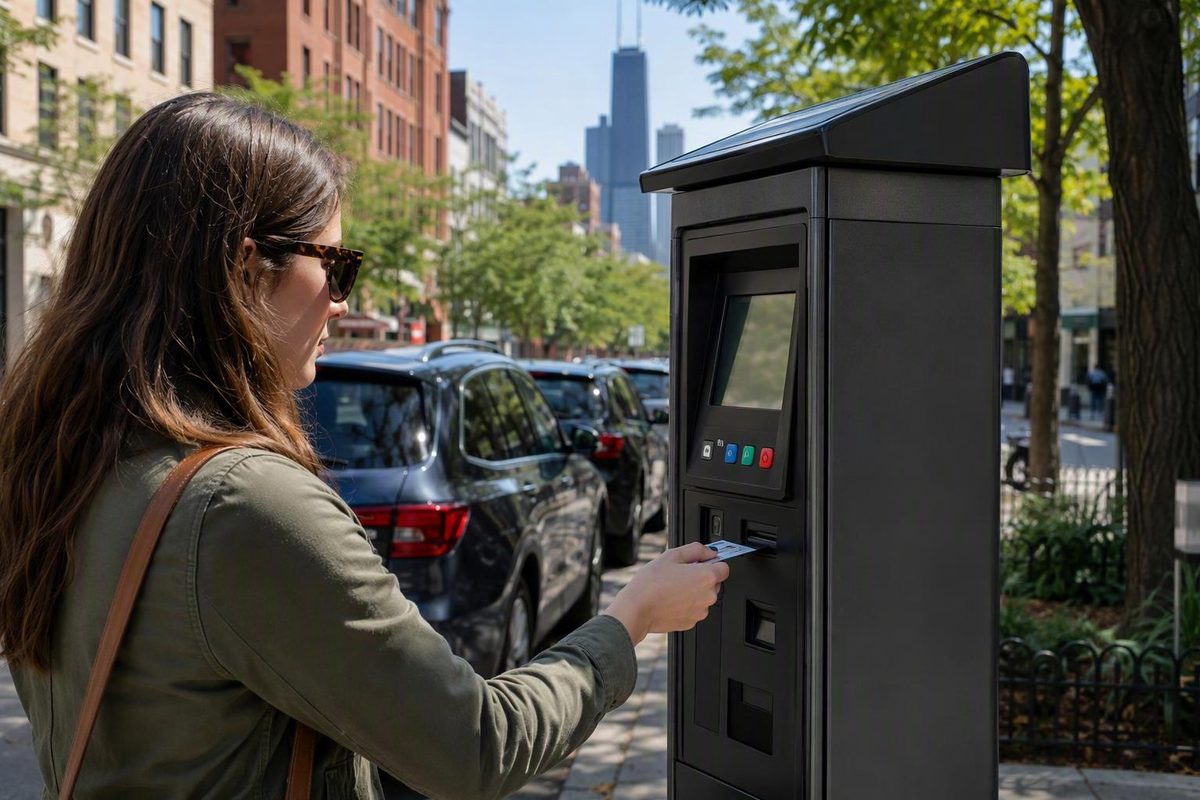
In Lincoln’s program, the parker scans the entry ticket and then the validation at the exit kiosk Validations – City of Lincoln, NE. Check that the displayed charge has changed, pay any remaining balance, and retain the ticket or other proof until the vehicle is outside.
What parking validation means
When a business says it “validates parking,” it means the business—or another approved organization—authorizes a parking benefit for an eligible visitor. The validating party might be a merchant, venue, employer, hospital, university, property manager, or municipal program.
The arrangement normally involves three parties:
- The driver starts a paid parking session.
- The validating organization confirms that the driver qualifies.
- The parking facility or its operator connects the benefit to the session and calculates the remaining charge.
The validating organization may prepay for the benefit or accept responsibility for redeemed validations under an account agreement. The parking transaction, equipment, rates, and exit procedure are administered under the facility’s rules; ownership, rate-setting authority, and operational responsibility can vary.
Birmingham provides one documented account model. Approved businesses can validate customer tickets for free or reduced-rate exits, and the Birmingham Parking Authority invoices participating businesses for the previous month’s redeemed validations (Birmingham Parking Authority validation program).
Validation is not necessarily free parking
“Validated parking” and “free parking” are not interchangeable. Validation may provide:
- Full coverage for an eligible session
- A limited amount of free time
- A fixed-dollar credit
- A percentage reduction
- Prepaid parking hours
- A special or re-rated parking fee
For a hypothetical fixed-credit example:
Original parking charge: $12 Validation credit: $5 Remaining amount due: $7
The system calculates the original charge and subtracts the authorized fixed credit. A percentage benefit is generally applied after the gross parking fee has been determined, while an event-rate validation may replace the normal rate schedule rather than subtracting a fixed amount (garage fee and validation calculation guide).
Time-based validation works differently. A merchant might cover the first hour or first two hours. If the driver stays beyond the covered period, the facility applies its rate rules to the remaining transaction.
Even “full validation” remains subject to the program’s limits. It might cover the complete normal charge for one qualifying visit without covering an overnight stay, a second entry, or parking during a special event.
Validation, vouchers, and coupons
Facilities do not use these terms consistently. A validation may take the form of:
- A stamp or mark on an entry ticket
- A separate paper voucher
- A prepaid barcode
- A merchant-issued coupon
- A QR code
- A discount stored in an electronic account
- A link between an eligible visit and a license plate
One program may use validation and voucher for the same product. Asheville, for example, uses those terms interchangeably for its prepaid city-garage benefit. Its documented process requires the driver to scan the entry ticket and then the validation card; the driver pays any balance the validation does not cover (City of Asheville parking validations).
Another facility may use voucher for the credential and validation for the act of applying the discount. Follow the terminology and instructions printed on the facility’s signs, ticket, website, or payment screen.
Most importantly, eligibility is not automatic. Visiting a participating restaurant, attending an appointment, or making a purchase may qualify you to request validation, but the benefit still must be issued and correctly associated with the parking session.
How the process works from entry to exit
Equipment varies, but a successful parking-validation transaction normally follows the same broad sequence.
1. Enter or register the parking session
A gated garage may issue a paper ticket when you enter. A ticketless lot might record your license plate. Other facilities may create an app session, account record, barcode, or payment-card record that identifies when parking began.
Before walking away, identify what you will need later:
- Paper entry ticket
- Printed barcode
- License plate number
- Mobile parking session
- Account credential
- Payment-card record
If the facility issues a ticket, take it with you unless posted instructions say otherwise. A merchant cannot stamp or scan a ticket left in the vehicle.
2. Preserve the entry credential
Keep a paper ticket flat, dry, and readable. Avoid folding through the barcode or placing the ticket where it may become damaged.
In a plate-based system, check every letter and number. Enter the issuing jurisdiction if the interface requests it. A benefit connected to the wrong plate may not match the active session.
3. Confirm that the business participates
Businesses in the same building or district may have different parking agreements even when their customers use the same garage.
Ask a specific question:
“Do you validate for this garage, and what does the validation cover?”
This prompts staff to confirm both the location and the benefit. If the garage name is unclear, show the ticket or the parking confirmation screen.
4. Meet the eligibility requirements
The validating organization may require:
- A qualifying purchase
- An appointment
- A ticketed event
- Hotel check-in
- Employee or student status
- Membership in an approved group
- A visit during specified hours
If a purchase minimum applies, ask what counts. Do not assume that taxes, tips, gift cards, returns, or combined receipts are included.
Also ask when validation must be requested.
5. Obtain the validation
Staff may:
- Stamp or mark the entry ticket
- Provide a separate voucher
- Scan the ticket at a merchant terminal
- Print or display a barcode
- Send a code by text or email
- Enter a code into an account
- Associate the benefit with a license plate
Check that you received the required credential or confirmation. A verbal statement that parking is covered does not necessarily give a kiosk enough information to identify the discount.
6. Associate the validation with the session
The benefit may be applied at a staffed cashier, merchant counter, lobby kiosk, pay station, mobile interface, or exit terminal. Some systems connect it as soon as the merchant scans the entry ticket. Others require the driver to scan two separate items later.
Lincoln provides an official municipal example. At the exit kiosk, the driver scans the entry ticket, reviews the initial amount due, scans the validation, and pays any remaining balance. Lincoln’s validations prepay parking time for customers, employees, and event guests, subject to the city program’s restrictions (City of Lincoln validation instructions).
Asheville documents the same broad mechanic for its city garages: scan the entry ticket, scan the validation, and pay any uncovered balance.
7. Review the adjusted charge
Do not assume that a stamp or scan worked. Look for evidence on the screen:
- The total decreases
- A validation line appears
- Covered time is displayed
- The screen shows no amount due
- The gate is authorized to open
A ticket may be physically stamped but fail to reduce the electronic transaction if the benefit was not read or associated correctly. The adjusted payment screen—not the stamp alone—shows whether the system recognized it.
8. Pay any remaining balance and exit
If the validation is partial, pay the legitimate amount left after the credit. Complete all payment prompts and take a receipt when available, especially if the amount differs from what staff described.
Keep the entry ticket, validation, receipt, code, or screenshot accessible until the gate opens and the vehicle is outside.
Request and apply validation before paying or exiting. The available program rules do not establish a universal right to add a discount after payment, after the gate opens, or following a later re-entry.
Validation methods and discount structures
Parking validation can use paper, digital, staffed, or ticketless workflows. The table describes possible implementations; the exact process depends on the facility’s equipment and rules.
| Validation method | What the driver carries or provides | Possible redemption point | How the session may be matched |
|---|---|---|---|
| Stamped or marked ticket | Original entry ticket | Merchant counter, cashier, pay station, or exit | The mark or ticket data identifies the authorized benefit |
| Prepaid voucher | Separate paper or electronic voucher, often with a barcode | Pay station, kiosk, or exit terminal | The voucher is scanned after the entry credential |
| Barcode or QR code | Printed code or code displayed on a phone | Pay station, kiosk, mobile page, or exit | The system reads the value or time assigned to the code |
| Merchant-generated digital code | Text, email, printed slip, or manually entered code | Payment interface or exit terminal | The code is checked against the relevant merchant account or session |
| Kiosk or electronic account | Ticket, account identifier, or digital session | Merchant terminal, lobby kiosk, or parking account | A merchant action adds the benefit to the parking record |
| License-plate association | Correct plate number, sometimes with proof of visit | Merchant interface, website, app, or integrated system | The plate-linked parking record is connected to the eligible visit |
Methods can overlap. A paper voucher may contain a QR code, while a merchant terminal may scan a paper ticket and store the resulting benefit electronically.
Fixed-dollar validation
A fixed-dollar validation subtracts a stated amount from the calculated parking charge. If the fee is smaller than the credit, the treatment of unused value depends on the program. Do not assume that unused value becomes cash, transfers to another visit, or remains available.
Time-based validation
A time-based validation covers a defined period, such as the first hour or first two hours. The facility then prices the session under its own rules.
The key question is not merely “How many hours are covered?” It is also “How does this garage calculate the uncovered time?” Rate brackets, rounding, and daily limits can produce different balances.
Percentage validation
A percentage validation reduces the monetary charge after the system determines the applicable gross fee. It does not reduce the physical parking duration. The program’s rules determine how the reduction interacts with minimum charges, maximums, or other amounts.
Full validation
A full validation covers the entire authorized session. If all conditions are satisfied and the system applies the benefit successfully, the driver may owe nothing.
Full coverage can still be limited to:
- One defined visit
- A same-day session
- Specific operating hours
- A particular facility
- A maximum duration
- Normal hourly parking
- Non-event periods
A charge may appear when the session falls outside those limits.
Prepaid hours
Prepaid-hour validations authorize a specified amount of parking time. An organization purchases them in advance and distributes them to customers, employees, or guests. The driver applies the prepaid benefit and pays anything not covered.
The amount an organization pays for prepaid validations is a local program price, not necessarily the public parking rate and not a useful estimate for another city or facility.
Event-rate or re-rated parking
A re-rated validation replaces the ordinary tariff with another approved rate. For example, a qualifying evening visitor may receive a defined rate instead of the normal hourly calculation.
That differs from a fixed coupon:
- A fixed coupon subtracts a stated amount from the calculated charge.
- A re-rate instructs the system to calculate the session under another schedule.
Entry time, exit time, and the event window may determine whether the alternative rate applies. A special event can also suspend ordinary validation and substitute pay-on-entry or flat-rate parking.
Monthly permits are separate
Monthly parking generally provides continuing access or recurring parking rights under a permit or account. Visit-based validation usually concerns one eligible session connected to a customer, appointment, purchase, or event.
A particular facility may place both arrangements within a broader parking-benefits program, but drivers should not assume that a merchant validation creates monthly access or that a monthly permit functions as a visit-based discount.
Paper, digital, and plate-based tradeoffs
Paper tickets are easy to hand to visitors but can be lost, damaged, or left in a vehicle. Digital codes can support configurable rules and transaction records, but they depend on correct data, compatible equipment, and the chosen delivery method. Plate-based systems remove the need for a physical ticket but can fail to match a session when the plate is entered incorrectly.
Some vendor systems offer tenant-specific rules, scheduled validation windows, budget caps, code delivery, and redemption reports. These are available features in certain products, not proof that every digital system includes them or that digital validation is inherently more reliable, private, secure, or accessible than paper validation (Parking BOXX validation workflow description).
The rules that determine whether validation applies
“We validate” is only the beginning of the policy. Before relying on the benefit, determine what makes the session eligible.
Qualifying activity and participating business
Eligibility may depend on making a purchase, attending an appointment or event, checking into a hotel, working for an approved employer, or belonging to a specified student or employee group.
Institutional programs can be narrow. Northwestern University’s Chicago parking page lists separate daily discount or validation arrangements for designated faculty, staff, and student groups rather than one benefit for everyone (Northwestern University daily validation programs).
A shared garage does not imply a shared validation policy. One tenant may cover two hours after a purchase, another may provide a fixed credit, and a third may not participate. Ask the specific business you are visiting.
Correct facility
A validation may work only in one designated garage, lot, or payment system. Even related facilities can use separate equipment, business lists, or merchant accounts.
Confirm:
- Garage name
- Street address
- Entrance used
- Parking operator
- Payment system
- Whether the business corresponds to that facility
Parking in a nearby garage with a similar name can leave you responsible for the full charge.
Covered duration and operating hours
Restrictions may include:
- Maximum covered time
- Entry or exit time
- Day of the week
- Business operating hours
- Same-session use
- A deadline for requesting validation
A two-hour benefit does not necessarily remain usable all day. Likewise, “valid until 4 p.m.” may refer to an exit deadline rather than permission to enter before that time and stay later. Follow the program’s exact wording.
Purchase or request deadline
Some businesses require visitors to request validation at the time of purchase. Returning later with a receipt may not be enough if the merchant must issue a separate credential or connect the benefit while the transaction is active.
Austin’s temporary Downtown Patron Parking Program illustrates the distinction. As of July 30, 2026, the published pilot was scheduled to run through August 30, 2026, or while voucher supplies lasted. Customers had to request a separate voucher from a listed business at the time of purchase; receipts were expressly rejected as substitutes. Vouchers were tied to designated convention-center garages, hours, and event exceptions (Downtown Austin parking-validation rules).
A receipt may still play a role elsewhere. It might contain a code or serve as proof for staff. It is not automatically a validation unless the local program says it is.
Overstays and uncovered balances
If a stay exceeds the validated time or value, the driver generally pays the balance calculated under the facility’s rules. This can happen when:
- A one-hour benefit is applied to a longer stay
- A fixed credit is smaller than the fee
- A maximum validated duration is exceeded
- An overnight or daily rule changes the calculation
- The session extends outside eligible hours
A long stay does not necessarily erase the authorized portion of the benefit, but the local rules control. Apply the validation and inspect the adjusted total rather than guessing the uncovered charge.
Special events and access
Concerts, games, conventions, and festivals can change parking operations. A garage may collect payment at entry, reserve spaces, close to general traffic, or switch to a flat event rate.
Location-specific examples include:
- Lincoln excludes its ordinary validations during prepaid football parking and special events. Its garages are also subject to availability, and unused validations are nonrefundable.
- Asheville limits its validations to regular hourly parking rather than pay-on-entry special-event parking. Its prepaid validations do not expire (Asheville event and expiration terms).
- Austin’s 2026 pilot listed dates when ordinary vouchers were unavailable and flat event rates applied.
These examples do not create a universal rule. A venue may offer an event-specific validation even when ordinary merchant validation is suspended.
Validation also does not reserve a space, guarantee that a garage is open, or override access restrictions. If parking is essential for a timed appointment or event, check the facility’s current status and identify a backup.
Expiration, refunds, and verification
Expiration and refund terms are program-specific. Inspect the voucher or code for an expiration date and restrictions. Organizations purchasing validations should obtain written terms for unused inventory, cancellations, account closure, and transaction errors.
Because the validating organization determines why a visitor qualifies while the parking facility administers the transaction, uncertain terms may require confirmation from both parties. Merchant staff can explain the eligibility rule; the operator can confirm where and how the credit is accepted.
Worked examples: how the remaining balance is determined
The final charge depends on both the validation and the facility’s rate rules. These examples illustrate the mechanics without assuming that every garage calculates fees identically.
Fixed-credit example
Suppose the parking system calculates a hypothetical $12 gross fee and the merchant provides a $5 fixed validation.
| Calculation | Amount |
|---|---|
| Gross parking charge | $12 |
| Fixed validation credit | −$5 |
| Driver pays | $7 |
The system determines the gross charge and subtracts the fixed credit. Actual results still depend on the facility’s calculation and the benefit’s eligibility rules (validation calculation methods).
Time-credit example
Suppose validation covers the first two hours and the driver stays longer.
The benefit covers the authorized period. The parking system then applies its configured method to the transaction. Without the facility’s tariff, time brackets, rounding method, and maximum charge, the exact balance cannot be calculated responsibly.
The driver should inspect the payment display instead of assuming that every additional minute or hour has a particular price.
Full-coverage example
A driver enters an eligible garage, receives validation for the complete authorized session, and applies both the entry credential and validation at the designated terminal.
If the system recognizes full coverage, it may display no payment due and authorize the gate to open. If a fee remains, the validation may cover less time than expected, belong to another facility, fall outside an eligible window, or have failed to scan.
Partial prepaid-hours example
A guest receives prepaid parking hours, but the session costs more than the benefit covers.
The general sequence is:
- Scan or enter the parking credential.
- Review the initial amount due.
- Apply the validation.
- Review the reduced amount.
- Pay any balance still displayed.
Official Lincoln and Asheville workflows both use this broad scan-and-pay mechanic. Their local prices and purchasing terms are specific to those cities and should not be treated as typical market rates.
Percentage-reduction example
A percentage benefit cannot be applied until the gross fee is known. The system must first identify the session duration and applicable rate schedule, calculate the gross charge, and then apply the authorized percentage.
This is why a statement such as “percentage-off parking” is incomplete without the underlying rate. The same percentage can produce different savings on a short-stay fee and a daily maximum.
Event-rate example
Suppose a garage normally charges by time but changes to a flat event rate during a concert. The event rule may:
- Replace the normal tariff
- Make merchant validations ineligible
- Accept only event-specific credentials
- Require payment at entry
- Restrict access to event customers or permit holders
A validation designed for ordinary hourly parking may have no effect in that situation. Follow the posted event instructions.
Why the total may differ from expectations
Four elements interact:
- The facility’s posted tariff
- Any daily maximum or other cap
- Its rounding or time-bracket method
- The validation’s time, value, and eligibility limits
A merchant may accurately state that it provides two hours, yet a driver who stays longer or enters during an event window may still see an unexpected balance. The payment screen shows the actual adjusted transaction.
Before you drive to the exit: a validation checklist
Use this checklist while you can still reach the merchant or parking office easily.
- [ ] Confirm that the specific business participates.
- [ ] Confirm that you parked in the correct garage or lot.
- [ ] Read the purchase, appointment, event, or membership requirement.
- [ ] Check the covered amount or duration.
- [ ] Check operating hours and special-event exclusions.
- [ ] Preserve the ticket, barcode, plate record, or other entry credential.
- [ ] Request validation at the required point in the visit.
- [ ] Obtain the correct stamp, voucher, code, or electronic confirmation.
- [ ] Apply the validation before paying or exiting.
- [ ] Confirm that the payment screen shows the reduced total.
- [ ] Pay any legitimate remaining balance.
- [ ] Keep the validation and payment proof until the vehicle is outside.
If the displayed charge does not change
A validation may fail to reduce the fee if it is not correctly associated with the parking transaction. Possible causes include:
- Wrong garage or payment system
- Unreadable ticket or code
- Incorrect license plate
- Expired or previously used credential
- Ineligible entry or exit time
- Incorrect merchant selection
- Missing electronic association
- Event-rate override
- Insufficient validated time or value
Before completing payment, look for an assistance button, staffed office, cashier, or posted operator contact. Explain what you scanned and what the screen displays. Seeking help while the transaction is active is practical, but it does not guarantee that the charge will be changed.
If the ticket is lost or damaged
A lost, damaged, or unreadable ticket may be handled under the facility’s lost-ticket or maximum-rate policy rather than its normal validation procedure.
Keep proof of the visit, but do not assume that a receipt or appointment record replaces the entry ticket. Ask the operator which documentation it accepts.
Questions without universal answers
The available policies do not establish universal rules for:
- Combining or stacking multiple validations
- Leaving and re-entering on one validation
- Adding validation after payment
- Correcting a session after exit
- Refunding a completed payment
- Transferring unused value
- Applying a validation retroactively
- Resolving a plate or code mismatch
Direct these questions to both the validating organization and the parking operator. If the answer matters financially, obtain it before parking or before completing payment.
How businesses and property managers run a validation program
A validation program is more than a stamp at the counter. It connects visitor eligibility, merchant authorization, parking-rate logic, payment equipment, funding, and reconciliation.
Before launch, an organization should decide who qualifies, what the benefit covers, how it is issued, who pays for it, and how failed transactions will be handled.
Choose a funding model
Two documented models are:
Prepaid distribution: The organization purchases validations in advance and distributes them to customers, employees, or guests. The validation may represent parking time, a fixed value, or an authorized session. Lincoln and Asheville document prepaid municipal programs.
Post-use billing: An approved business issues validations through an account and later receives an invoice for redeemed benefits. Birmingham uses this model for participating businesses.
These models create different administrative questions. A prepaid program requires decisions about inventory, distribution, expiration, and unused value. A post-use account requires authorization controls, invoice review, and a process for disputed redemptions.
Define the policy
Document:
- Eligible visitors
- Qualifying purchases, appointments, or events
- Participating garages and lots
- Covered time, value, percentage, or rate
- Operating days and hours
- Same-session requirements
- Event exclusions and overrides
- Expiration and refund rules
- Whether benefits may be combined
- Responsibility for uncovered balances
- Responsibility for failed validations
- Lost-ticket handling
- Staff authorization levels
As a practical design choice, keep the customer-facing policy as direct as the program allows. If tenants offer different benefits, make those differences visible in staff instructions and customer materials.
Select and test the workflow
Options include:
- Manual ticket stamps
- Printed vouchers
- Preprinted barcodes
- QR codes
- Merchant terminals
- Electronic validation accounts
- Mobile or web interfaces
- License-plate matching
Choose according to the property’s visitors, existing equipment, and operating model rather than assuming that paper is obsolete or digital is automatically superior.
A ticketless garage may favor plate association. A property serving visitors without smartphones may need a staffed or printed alternative. A multi-tenant facility may need separate merchant rules and reporting.
Before committing, check compatibility with:
- Entry and exit gates
- Ticket dispensers and barcodes
- Pay-on-foot machines
- Exit terminals
- Cashier equipment
- Mobile payment platforms
- Merchant accounts
- Plate-recognition workflows
- Event-rate configurations
- Financial and reporting systems
- Available connectivity
Test what happens when the garage changes from hourly parking to pay-on-entry event parking. Determine when the system calculates the gross charge and when the benefit is applied.
Build controls and reconciliation
Some systems offer tenant-specific rules, validation windows, monthly budget caps, transaction records, invoicing, and reports. At minimum, reconciliation should answer:
- How many validations were issued?
- How many were redeemed?
- Which merchant authorized them?
- What value was applied?
- When and where were they used?
- What amount remained payable?
- Which transactions received manual adjustments?
- Does the operator’s invoice match the transaction records?
Assign responsibility for reviewing exceptions instead of treating an invoice as self-explanatory.
Prepare staff and customer instructions
Staff training should cover:
- Who qualifies
- What proof is required
- Which facility accepts the benefit
- How to issue or apply it
- How to explain partial balances
- Event exclusions
- What to do during an outage
- When to contact the operator
Customer instructions should be brief and sequential:
Park in Garage A, bring your entry ticket, request validation at checkout, scan the ticket and validation at the lobby pay station, pay any remaining balance, and keep the ticket for exit.
Avoid advertising only “free parking” when the actual benefit is limited by time, value, purchase, availability, or event rules.
Plan for outages, accessibility, privacy, and security
Create fallback procedures for an unreadable barcode, offline terminal, unavailable portal, plate mismatch, printer failure, or closed parking office.
Review how visitors can participate if they lack:
- A smartphone
- A printer
- A payment card
- Reliable mobile service
- The ability to use a touchscreen or scan a small code
The evidence does not identify one universally accessible method. Test the complete journey with the people the facility serves and provide alternatives where the chosen process creates barriers.
Plate- and transaction-linked systems may connect parking records with purchases, appointments, or tenant visits. Before implementation, determine what data is collected, why it is needed, which parties receive it, who can correct errors, and how responsibility is divided among the property, operator, and vendor. Do not describe a plate-based system as inherently private, secure, or compliant without evidence about its specific design and governance.
Pilot before broad deployment
HONK, a commercial vendor, recommends starting with selected tenants before wider deployment; its broader performance claims should be treated as promotional rather than independent evidence (HONK pilot recommendation).
Useful pilot measures include:
- Validations issued and redeemed
- Failed or rejected validations
- Processing time
- Customer and staff complaints
- Uncovered balances
- Manual overrides
- Operator-assistance requests
- Cost per redemption
- Invoice discrepancies
- Failures during events or outages
Measure the program’s actual results. Claims that digital validation eliminates fraud or necessarily increases revenue, loyalty, utilization, or customer satisfaction are not independently substantiated by the available evidence.
Frequently asked questions
Does parking validation mean parking is free?
Not always. Validation may cover the entire eligible session, but it can also provide limited free time, a fixed credit, a percentage discount, prepaid hours, or a different rate.
“Free validated parking” remains subject to the program’s facility, duration, operating-hour, qualifying-activity, and event restrictions.
What happens if I stay longer than the validated time?
You generally pay the amount not covered by the validation under the facility’s rate rules. The garage may use time brackets, rounding, minimum charges, or a daily maximum when calculating the balance.
Apply the validation unless the program says the session has become ineligible, then review the adjusted total before paying.
Can I use my purchase receipt as parking validation?
Only if the specific program accepts the receipt or uses it to generate the discount. A receipt is not automatically a validation.
A facility may require a stamp, separate voucher, QR code, or electronic association. Ask at the time of purchase rather than returning after the transaction has ended.
Does validated parking guarantee a space in the garage?
No. Validation concerns an eligible parking charge; it does not normally reserve a space or guarantee access.
A garage may be full, closed, restricted, or operating under special-event rules. Check availability separately when parking is essential to a timed visit.
Can parking validation be used during concerts, games, or other special events?
Sometimes. A facility may accept ordinary validation, offer an event-specific benefit, substitute a special rate, or suspend validation entirely.
Check the event-day rules for the exact garage. Do not rely on the facility’s ordinary merchant policy when signs or current instructions announce event parking.
Parking validation is best treated as a conditional credit, not an assumption of free parking. Verify the participating business, correct facility, covered amount or time, redemption method, and event restrictions. Apply the benefit before payment, confirm that the reduced total appears, and keep proof until the exit is complete.
Businesses should make those same rules explicit and support them with compatible equipment, trained staff, accessible alternatives, transaction reconciliation, and a clear process for failed validations.