
17 min read ·
Best Steakhouses in Chicago: A Decision Guide
Pick Maple & Ash for celebrations, Gene & Georgetti for a classic dinner, Gibsons Italia for river views, or Asador Bastian for live-fire Basque cooking.
Overview
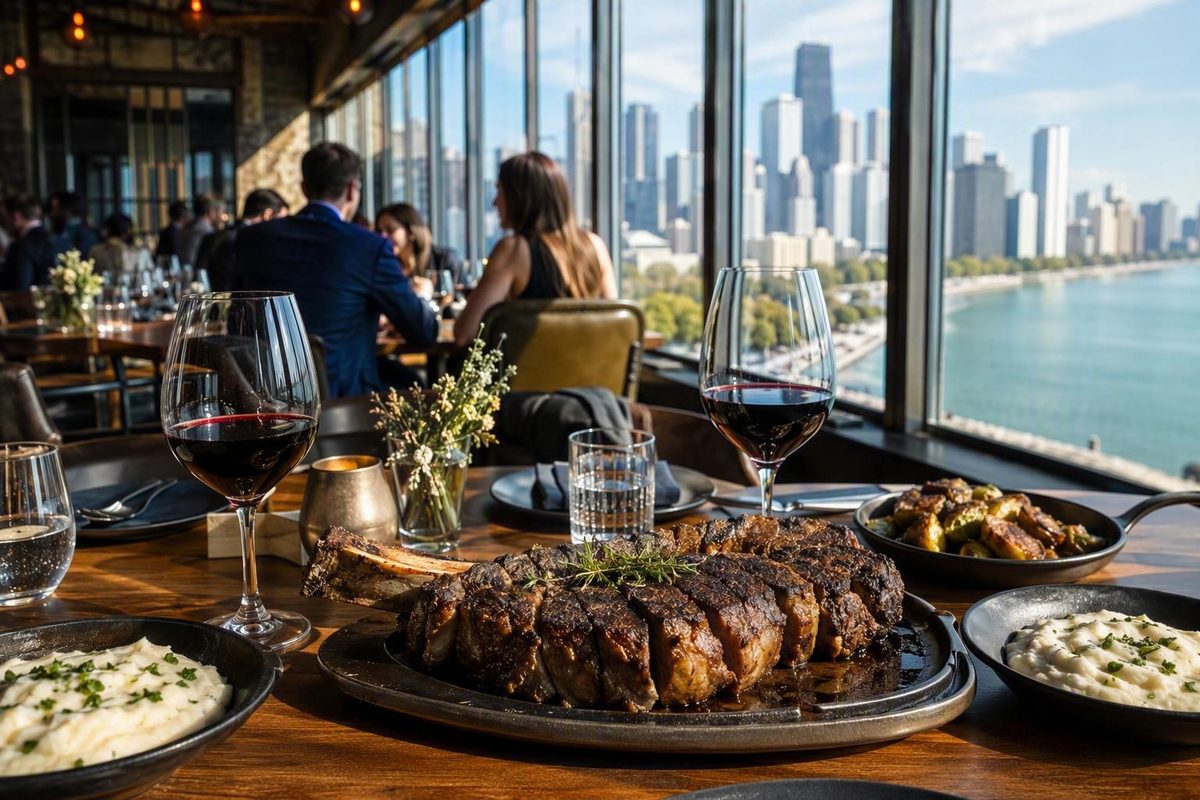
There is no single best steakhouse in Chicago that the available evidence can defend, so choose by occasion instead. Book Maple & Ash for a lively celebration, Gene & Georgetti or Prime & Provisions for a classic dinner, Gibsons Italia for river views, and Asador Bastian for live-fire Basque cooking with a genuine walk-in option.
The reason this guide refuses to crown one winner is simple: the sources disagree, and each ranks by a different method. Eater Chicago’s steakhouse map is an editorial shortlist that includes Maple & Ash, Boeufhaus, The Alston, Asador Bastian, Chicago Chop House, Steak 48, Hawksmoor, and Gene & Georgetti. Tripadvisor’s steakhouse category orders restaurants by traveler ratings, placing Steak 48 (4.5) first, followed by The Capital Grille (4.6), RPM Steak (4.5), Swift & Sons (4.5), and Maple & Ash (4.4). The MICHELIN Guide features Maple & Ash in its own Best Steakhouses in Chicago collection. Editorial taste, review averages, and guide inclusion are three different measurements, and none of them produces an objective number one. What they do produce, together with the restaurants’ own sites, is a defensible shortlist you can sort by style, occasion, and preparation.
The matrix below compares the restaurants with the strongest multi-source or official support. Cells reflect only what the cited sources verify; where a detail is not documented, confirm it with the restaurant directly.
| Restaurant | Style | Steak approach | Best-supported fit | Verified planning signal |
|---|---|---|---|---|
| Maple & Ash | Modern | Confirm steak preparation directly; MICHELIN documents a wood-fueled oven for seafood | Featured on MICHELIN’s Best Steakhouses in Chicago list | $$$$ price band (MICHELIN); 3.5% transaction charge and dress code (official site) |
| Gene & Georgetti | Classic | Wet-aged, broiled (Eater) | Traditional old-Chicago dinner | Open since 1941 (Eater); reservation details: confirm directly |
| Prime & Provisions | Classic | On-site dry-aging room, 1,200-degree broiler (official site) | Traditional steakhouse meal with visible technique | Hours and booking: confirm directly |
| Gibsons Italia | Modern | Dry-aged and Australian cuts (Eater) | View-driven dinners; mixed steak-and-pasta groups | Tri-level room with skyline and river views (Eater) |
| Asador Bastian | Globally influenced (Basque) | Boutique steaks over live fire (official site) | Chef’s-table experiences; spontaneous nights | Walk-in Bar Room from 4pm; Dining Room bookable 30 days ahead (official site) |
| Trino | Globally influenced (Latin) | Confirm directly | Relaxed, less formal steak dinner | 2025 Eater Award winner (Eater) |
Use the rest of this guide to move from that at-a-glance comparison to a confident booking: the shortlist profiles explain each restaurant’s identity, the occasion and preparation sections help you match the room and the plate to your plans, and the budget and planning sections separate verified numbers from details you still need to confirm.
The Chicago steakhouse shortlist, organized by style
Start by choosing a style of steakhouse, not a name. The candidates that recur across Eater’s editorial map, Tripadvisor’s traveler rankings, official restaurant sites, and the MICHELIN Guide sort naturally into three groups: classic institutions built on the traditional Chicago formula, modern rooms that trade formality for energy or views, and globally influenced restaurants that borrow from other steak traditions entirely. That grouping is more useful than a one-to-ten order because the sources cannot agree on an order in the first place; Steak 48 sits first on Tripadvisor’s list while Eater presents its picks without numbered ranks at all. Eater’s framing captures why fit matters more than rank: Chicago’s steakhouses draw patrons “for everything from intimate date nights and power lunches to celebratory ‘we made it to Friday’ dinners,” and those are different jobs for different rooms. Decide which group matches your night first, then pick the restaurant within it.
Classic Chicago institutions
Choose a classic institution when you want the traditional steakhouse experience, the one built on aged prime beef, a serious broiler, and service with a sense of ceremony. Two restaurants in the evidence set define this category from opposite ends of its history.
Gene & Georgetti is the choice if history itself is part of the appeal. Eater identifies it as Chicago’s oldest steakhouse, opened in 1941, and describes a preparation that has stayed deliberately simple: steaks are wet-aged and then finished in the broiler. The wait staff still dresses in white coats, which Eater notes gives the space a special feel. Book it when you want dinner to feel like a continuation of the city’s restaurant history rather than a reinvention of it. The tradeoff is that simplicity: if you are chasing the funkier, more concentrated character of a long dry age, this is not the preparation that delivers it.
Prime & Provisions is the choice if you want the classic formula executed with visible, documented technique. The restaurant’s own site states that it “reconnects Chicago with its traditional steakhouse roots” and describes the mechanics in unusual detail: a 500-square-foot dry-aging room lined with Himalayan rock salt, beef seared in a 1,200-degree broiler, and steaks served on a sizzling hot plate topped simply with sea salt and Wisconsin all-natural grass-fed butter. That combination of long aging and extreme heat is the textbook classic-steakhouse method, and the restaurant is transparent about both stages. Choose it when the steak itself, rather than the scene around it, is the point of the evening.
Eater’s shortlist also includes Chicago Chop House among its picks, which signals editorial confidence in the broader classic category, though the supplied evidence does not detail its preparation or atmosphere. Treat it as a candidate worth checking directly rather than a documented recommendation. Between the two well-documented options, the practical split is this: Gene & Georgetti for atmosphere rooted in eight decades of continuity, Prime & Provisions for a classic plate built in a dry-aging room you could ask about by name.
Modern steakhouses
Choose a modern steakhouse when the room matters as much as the rib-eye: a livelier crowd, a view, or a menu broad enough that half your table can skip steak entirely.
Maple & Ash is the best-documented restaurant in this entire guide, and the evidence describes it consistently. The MICHELIN Guide calls it Chicago’s buzziest steakhouse, describing deep-set leather couches, clubby music, and even a photo booth that lend the multilevel space an irresistible party vibe. The cooking anchors that scene: the seafood program shows the kitchen’s fire-driven approach, and the seafood program includes a fire-roasted tower brought tableside with lobster tail, scallops, Manila clams, and king crab in garlic butter and chili oil. It sits at 8 W. Maple Street in the Gold Coast, carries MICHELIN’s $$$$ price band, and appears on Tripadvisor’s top-five with a 4.4 rating. Book it for a celebration or a date where energy is the goal; skip it if you want a quiet conversation.
Gibsons Italia is the choice when the view is the occasion. Eater describes a striking tri-level restaurant with sweeping skyline and river views, where the kitchen serves Gibsons’ signature dry-aged and Australian cuts of beef alongside Italian dishes such as chicken Parm, pastas, and a seven-year-aged risotto with scallops. That Italian side makes it one of the easiest picks in this guide for a group where not everyone wants a steak. Tripadvisor lists it at 4.4 across 259 reviews. Choose it for a dinner meant to show a visitor the Chicago River; accept that you are paying for the setting as much as the beef.
Steak 48 and Swift & Sons round out the modern group on thinner evidence. Steak 48 has the strongest cross-source signal of the two: it appears on Eater’s editorial shortlist and holds first position in Tripadvisor’s traveler ranking at 4.5. Swift & Sons carries a matching 4.5 on Tripadvisor. The supplied sources do not document either restaurant’s preparation style or atmosphere in detail, so treat them as well-rated candidates whose specifics you should verify on their own sites before booking. The Capital Grille, at 4.6 the highest traveler rating in Tripadvisor’s list, sits in the same category: a strong review signal without corroborating editorial or official detail in this evidence set.
Globally influenced alternatives
Choose a globally influenced steakhouse when you want serious beef without the American steakhouse formula around it. The evidence set supports two well-defined examples, one Basque and one Latin, and they occupy opposite ends of the formality spectrum.
Asador Bastian is the pick for diners curious about how another culture treats a great steak. The restaurant’s official site describes boutique steaks cooked over live fire, wild seafood from the markets of Barcelona, and “the warmth of a true asador,” a reference to the grill houses of San Sebastián that inspired it. The structure of the restaurant is itself a decision aid. The ground-floor Bar Room opens daily at 4pm and welcomes walk-ins for the full menu and a drink. The upstairs Dining Room, set beneath 1930s Murano glass, is reservation-only and bookable thirty days ahead. For the fullest version of the experience, a ten-seat chef’s table looks straight into the flames of the asador. It also appears on Eater’s editorial shortlist, which gives the Basque concept independent editorial backing. Choose the Bar Room for a spontaneous evening in River North; plan a month out for the Dining Room or chef’s table.
Trino is the pick if the stiffness of a traditional steakhouse is exactly what you want to avoid. Eater reports that chef Stephen Sandoval entered the steakhouse scene in 2025 with Trino, a Latin-influenced spot that won an Eater Award and deliberately “trades stiff formality for a more relaxed approach.” The supplied evidence does not detail Trino’s cuts or cooking method, so verify the menu directly, but the positioning is clear: Latin flavors and a looser room, with recent editorial recognition behind it. The broader shortlist hints at further international range (Eater includes Hawksmoor, a name associated with British steakhouse tradition), but the supplied sources do not describe its Chicago menu or room, so this guide limits its documented recommendations to the Basque and Latin examples above.
Steak beyond the traditional steakhouse
Consider skipping the steakhouse category entirely if what you actually want is an excellent steak dish rather than a full steakhouse evening. The distinction matters for both budget and atmosphere: a conventional steakhouse dinner commits you to a certain formality and spend, while strong steak preparations exist on menus that carry neither.
The Infatuation maintains a guide to Chicago’s “secret steakhouses”, restaurants that serve notable steak dishes without operating as steakhouses. Its documented example makes the value case concretely: a perfectly seasoned carne asada that, at $18, the guide calls “a pretty good deal for a well-prepared and generously-portioned steak.” Set that against the $225-per-person set menu Eater cites at the top of the conventional market and the gap between a steak dinner and a steak dish becomes obvious.
This route fits two readers in particular: the diner who wants beef on the plate but a casual room around it, and the group organizer whose table includes people uninterested in a two-hour steakhouse format. It is a supplement to the shortlist, not a replacement for it; when the occasion calls for the full experience, the restaurants above remain the answer.
Match the steakhouse to the occasion
Match the room to the occasion before you compare menus, because on this shortlist the atmospheres diverge more sharply than the steaks do. The evidence supports specific pairings rather than vague mood descriptions, and a few experience-level details can break ties between otherwise similar choices.
For a date, Maple & Ash has the strongest documentation: the MICHELIN Guide features it in its Most Romantic Restaurants in Chicago collection as well as its steakhouse list. The supplied sources do not document its current ambience, so verify the atmosphere independently before booking a quiet, candlelit evening. For a celebration or a large, loud group dinner, that same Maple & Ash profile (leather couches, photo booth, multilevel room) is the clearest fit in the evidence set, and Tripadvisor’s category signals confirm that Chicago steakhouses as a group serve romantic dinners, special occasions, business meetings, and large groups as distinct use cases.
The remaining occasions map as follows:
- Business meal: Tripadvisor flags business meetings as a core Chicago steakhouse category; The Capital Grille’s 4.6 traveler rating is the highest in its list, though the supplied sources do not detail its room, so confirm the setting fits your client.
- Impressing a visitor with the city: Gibsons Italia, where Eater documents sweeping skyline and river views across three levels.
- A food-first experience: Asador Bastian’s ten-seat chef’s table, which its official site says looks straight into the flames of the live-fire asador.
- Old-Chicago tradition: Gene & Georgetti, where Eater notes white-coated wait staff in a room operating since 1941.
- A relaxed night without steakhouse formality: Trino, which Eater describes as deliberately trading stiffness for ease.
Two cautions keep this honest. First, occasion fit is the one dimension where a mismatch ruins the evening even when the food is excellent, so weigh it above ratings. Second, the supplied evidence does not document patios, private dining rooms, or noise levels restaurant by restaurant; if your occasion depends on any of those, ask the restaurant directly when you book rather than assuming a special-occasion steakhouse has them.
How aging and cooking styles change the steak experience
Understand four terms before you order, because on this shortlist they are the real differences between plates: wet-aging, dry-aging, live-fire cooking, and broiling. None requires expertise to use, and each has a documented Chicago example.
Aging is what happens to the beef before it is cooked, and the two methods produce different characters. Wet-aging keeps the beef sealed in its own juices while it tenderizes; it is the simpler, milder approach, and Eater documents it at Gene & Georgetti, where steaks “are simply wet-aged before being thrown in the broiler.” Dry-aging exposes beef to controlled air over days or weeks, concentrating flavor as moisture leaves the meat; the general effect is a deeper, more intense beef character, though how pronounced that is varies by cut and duration. Prime & Provisions is the most transparent example, with a 500-square-foot dry-aging room lined with Himalayan rock salt that the restaurant says is meant to enhance the beef’s flavors through the aging process. Duration matters enough that Eater calls it out specifically, praising a 42-day dry-aged rib-eye complemented by béarnaise sauce at one of its shortlist picks. Dry-aged cuts also anchor the menus at Gibsons Italia and Maple & Ash, per Eater and the MICHELIN Guide respectively.
Cooking method is the second axis. Broiling means intense overhead heat that builds a hard, uniform crust fast; Prime & Provisions describes searing its beef in a 1,200-degree broiler before serving it on a sizzling plate with sea salt and Wisconsin grass-fed butter, and Gene & Georgetti’s wet-aged steaks go to a broiler as well. Live-fire and wood-fired cooking trade that uniformity for smoke and char from real flame. Asador Bastian cooks boutique steaks over live fire in the Basque asador tradition, and MICHELIN documents Maple & Ash’s seafood prepared in a wood-fueled oven, though its steak-cooking method is not described in the supplied sources.
For ordering purposes, the practical guidance reduces to two questions. If you want the familiar steakhouse steak, a hard crust and clean beef flavor, the broiler-driven classics (Prime & Provisions, Gene & Georgetti) deliver it, with Gene & Georgetti’s wet-aged approach the milder of the two. If you want smoke and fire as part of the flavor, book the live-fire rooms (Asador Bastian, Maple & Ash), and at Asador Bastian consider the chef’s table, where the official site says you watch the flames directly. One boundary worth stating: the supplied sources document these methods but not head-to-head tastings, so treat the flavor descriptions here as general characteristics of each technique, not verified comparisons between these specific restaurants. Sourcing details beyond Gibsons Italia’s Australian cuts and Prime & Provisions’ natural-beef language are likewise undocumented; ask the restaurant if provenance matters to you.
What to budget—and what the evidence cannot compare
Budget for the top of Chicago’s dining market and verify the specifics, because the honest answer is that the sources support price markers, not comparable per-person totals. Here is what the evidence actually establishes.
Maple & Ash carries the clearest signals. The MICHELIN Guide assigns it the $$$$ band, its highest price tier, and OpenTable lists it as “$50 and over” with a documented brunch price of $95 per person and $55 for kids 12 and under. The restaurant’s own site discloses two costs that menus rarely surface: a 3.5% charge added to all transactions, which the restaurant says helps cover staff health insurance and wellness, and a $22 valet service next door. Fees like these are worth checking anywhere you book, because they change the final bill without appearing on the food menu.
At the set-menu end, Eater’s guide cites a $225-per-person tasting that “puts the decision-making in the kitchen’s hands” at one shortlist pick and a family-style chef’s set menu at $135 per person at another, alongside a Sunday-only prime rib plate as a lower-commitment order. At the opposite extreme, The Infatuation’s secret-steakhouses guide documents an $18 carne asada it calls a good deal for a well-prepared, generously portioned steak, a useful reminder that steak in Chicago spans more than one price universe.
What the evidence cannot do is compare. There are no current, like-for-like dinner totals (steak, sides, drinks, fees) across this shortlist, no documented à la carte steak prices for most restaurants, and nothing that identifies a better-value option among the main picks. Any article quoting confident per-person totals for the full shortlist is estimating. The defensible approach is to check the current menu on the restaurant’s own site before booking, ask about service or transaction charges when you reserve, and treat the figures above as anchors, not a price list.
Reservations, walk-ins, and practical planning
Plan on booking ahead as the default, and treat Asador Bastian’s Bar Room as the one verified exception. Eater advises readers to book ahead at one of its picks that it calls “one of the busiest restaurants in town,” and nothing in the evidence suggests the rest of the shortlist is easier on a Saturday night.
Asador Bastian is the only restaurant in this evidence set with fully documented booking mechanics, and they are worth knowing verbatim. Per its official site, the ground-floor Bar Room opens daily at 4pm and welcomes walk-ins for the full menu and a drink, while the upstairs Dining Room is reservation-only and bookable thirty days ahead, with a ten-seat chef’s table as the fullest version of the experience. That gives you two concrete plays: arrive early for the Bar Room on a spontaneous night, or set a calendar reminder exactly thirty days out for the Dining Room.
Maple & Ash shows why you should verify details on the restaurant’s own site rather than a booking platform. OpenTable lists its dress code as business casual, while the restaurant’s site describes an “elegant and chic” standard that excludes baseball caps, athletic wear, ripped denim, athletic sneakers, and open-toed shoes for men. When two sources disagree, dress to the stricter one. The MICHELIN Guide lists its dinner hours (5 PM to 10:30 PM Monday through Thursday and Sunday, from 4:30 PM Friday and Saturday) plus Sunday brunch, and the official site notes the $22 valet next door at 8 W. Maple Street.
For every other restaurant on the shortlist, the sources do not verify hours, reservation release timing, dress codes, transit, or parking. Before you leave, confirm four things directly with the restaurant: current hours for your specific day, how far ahead reservations open, the dress code as the restaurant states it, and your parking or transit plan. Five minutes of checking protects a dinner you have been planning for a month.
Non-steak choices and dietary questions to verify
If your table includes non-steak eaters, book Maple & Ash, Gibsons Italia, or Asador Bastian first, because those are the three restaurants where the evidence documents substantial alternatives rather than a token option.
Maple & Ash has the deepest documented seafood program. The MICHELIN Guide says “seafood lovers will find plenty to mull over,” describing octopus and squid prepared in the wood-fueled oven with dill yogurt, arugula, and roasted potatoes, plus a fire-roasted seafood tower brought tableside with lobster tail, scallops, Manila clams, and king crab. OpenTable classifies the restaurant under steakhouse, seafood, and American cuisines, reinforcing that seafood is core to the menu, not a sideline. Gibsons Italia solves the problem differently: Eater documents an Italian menu alongside the beef, including chicken Parm, pastas, and a seven-year-aged risotto with scallops, which covers poultry and pasta eaters in one booking. Asador Bastian’s official site puts wild seafood from the markets of Barcelona beside its live-fire steaks. Eater also notes great seafood and veggie options among its shortlist picks, and observes that menus at these restaurants stretch beyond the expected with creative sides, standout seafood, and desserts.
Dietary accommodations are a different matter, and here the evidence runs out. Tripadvisor offers gluten-free, vegetarian, vegan, and kosher filters for Chicago steakhouses as a category, but that is a search feature, not restaurant-by-restaurant verification, and none of the supplied sources confirms allergy handling, gluten-free preparation practices, wheelchair accessibility, child policies, or noise levels at any specific restaurant on this shortlist. The one child-related data point is indirect: OpenTable lists a $55 brunch price for kids 12 and under at Maple & Ash, which indicates children are served at brunch but says nothing about dinner. If any of these needs would make or break your evening, call the restaurant before you book and ask specifically. The shortlist gives you the right candidates; the accommodation questions still belong to a direct conversation.