
18 min read ·
Plan a Realistic Five-Mile Ride, From Moving Time to Door-to-Door Time
For many casual rides, 25-40 minutes remains a useful first allowance when planning your time, but it is not a universal average.
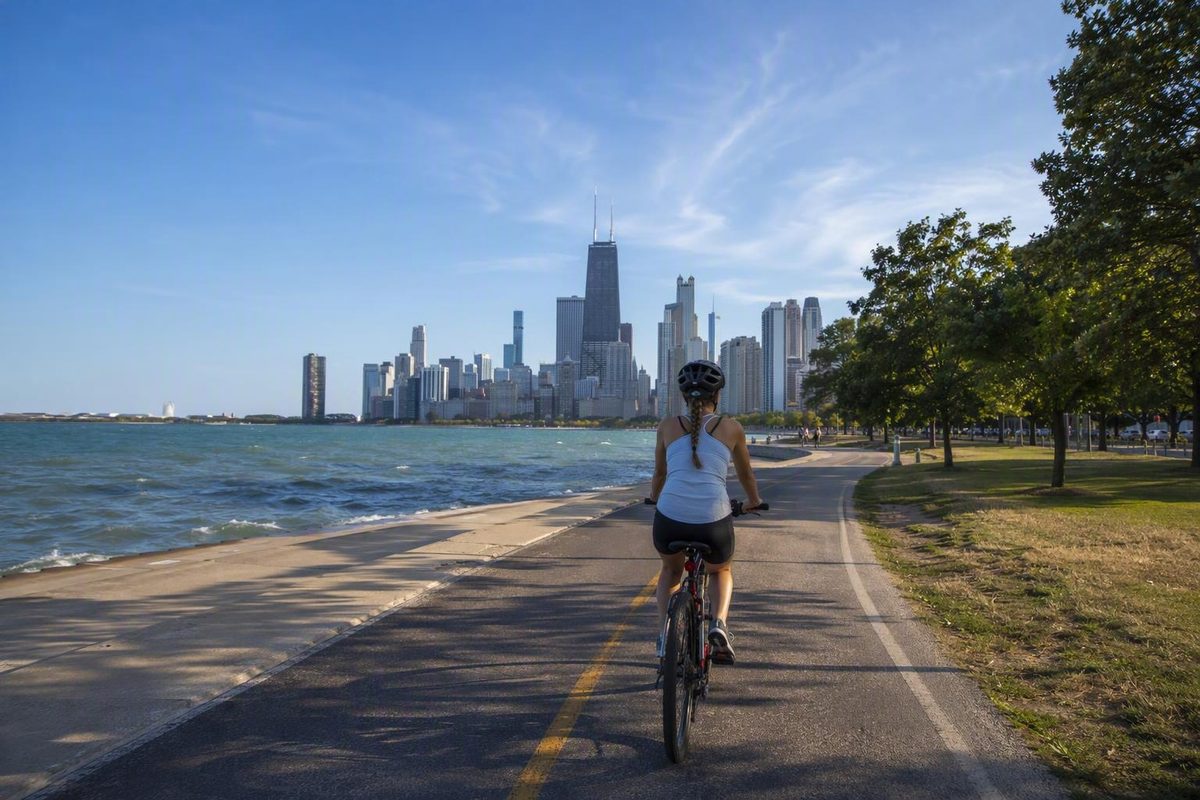
The short answer: allow about 25–40 minutes for many casual rides
For practical planning, allow roughly 25–40 minutes to bike five miles. This is an editorial planning range—not a measured population average or guaranteed result. It spans favorable casual riding at the quicker end and easier or slower riding at the longer end. Informal rider reports commonly put new or slower cyclists near 30–40 minutes, although the routes, bicycles, and timing methods were not standardized (Bike Forums discussion of five-mile times).
Commercial cycling tables modeled from assumed speeds often produce estimates in the low-to-mid 20-minute range for casual riding. One such table estimates 21–33 minutes at assumed average speeds of 9–14 mph, but those figures are modeled rather than measured across a representative group (Cyclists Hub’s five-mile estimates).
The basic arithmetic gives two useful reference points:
- At an average of 10 mph, five miles takes 30 minutes.
- At an average of 12 mph, five miles takes exactly 25 minutes.
These results follow directly from dividing distance by average speed and converting hours to minutes (bike-time calculation guidance).
To keep the different ranges clear:
- 20–30 minutes is plausible moving time for a comfortable casual rider on open, relatively flat pavement.
- 25–40 minutes is a broader first planning allowance that accommodates ordinary variation and slower riding.
- 30–40 minutes is a reasonable initial benchmark for a new or slower rider on a relatively flat route.
- 45–60 minutes may be possible with steep climbing, difficult weather, technical terrain, cautious riding, or frequent stops. Reports near an hour are anecdotal outer-bound examples, not typical flat-road results (reported five-mile experiences on Quora).
The headline range assumes:
- A conventional bicycle in usable condition
- A broadly level or gently rolling route
- Pavement or another reasonably efficient surface
- Manageable wind and weather
- No unusually long traffic, navigation, rest, or mechanical stops
- A sustainable rather than all-out effort
The estimate also needs a clear time definition. The speed calculation gives moving time under simplified conditions. A commuter’s door-to-door time may be longer because it includes signals, crossings, navigation, parking, locking the bicycle, and any arrival routine.
Because the available benchmarks are largely modeled from assumed speeds or drawn from personal reports, the best estimate comes from arithmetic: choose a realistic average speed, calculate moving time, and then add the delays specific to the route.
Calculate five-mile time from your average speed
If you know the average speed you expect to maintain, use:
Time in minutes = 300 ÷ average speed in mph
The underlying calculation is:
Time in hours = distance ÷ speed
For a five-mile ride:
Time in hours = 5 ÷ average speed
Multiplying by 60 converts hours to minutes:
Time in minutes = (5 ÷ average speed) × 60
Because 5 × 60 equals 300, the reusable five-mile formula is:
Time in minutes = 300 ÷ average speed in mph
Here are the calculated moving times:
| Average speed | Time to bike 5 miles |
|---|---|
| 6 mph | 50 minutes |
| 8 mph | 37 minutes 30 seconds |
| 10 mph | 30 minutes |
| 12 mph | 25 minutes |
| 15 mph | 20 minutes |
| 18 mph | 16 minutes 40 seconds |
| 20 mph | 15 minutes |
These values are arithmetic results based on distance and maintained average speed, not predictions that incorporate hills, weather, traffic, or stops (bike-time calculator methodology).
In this calculation, average speed means the average maintained across the ride. It is not:
- The fastest number briefly shown on a speedometer
- A downhill peak speed
- A preferred cruising speed that excludes slow sections
- The bicycle or motor’s maximum possible speed
For example, a rider expecting to average 9 mph would calculate:
300 ÷ 9 = 33.33 minutes
One-third of a minute is 20 seconds, so the estimated moving time is 33 minutes 20 seconds.
That result does not automatically include:
- Red lights or stop signs
- Pedestrian or rail crossings
- Route finding or wrong turns
- Water and rest breaks
- Mechanical delays
- Bicycle parking and locking
- Changing clothes or cleaning up after arrival
A cycling app can also create confusion if it pauses whenever the bicycle stops.
For planning, use the speed you can sustain across the whole route—not the pace you hope to reach on its easiest section. If you have no personal data, begin with a realistic low-end estimate, list the expected off-bike tasks separately, and revise the calculation after a test ride.
Five-mile estimates for beginner, casual, and faster riders
Ability labels are imprecise, but broad planning bands can still provide a starting point:
| Rider description | Rough five-mile moving time | Implied average speed |
|---|---|---|
| New or slower rider | About 30–40 minutes | Roughly 7.5–10 mph |
| Comfortable casual rider | About 20–30 minutes | Roughly 10–15 mph |
| Fit or performance-oriented rider | About 15–20 minutes | Roughly 15–20 mph |
These bands are calculations from assumed average speeds.
Terms such as beginner, casual, intermediate, and advanced vary among cycling sources. A source may classify riders by experience, assumed speed, percentile, equipment, or performance. Your realistic average speed is therefore more useful than the label attached to it.
New or slower riders
An uninterrupted average of 8–10 mph gives a five-mile moving time of 30–37 minutes 30 seconds:
- 8 mph: 37 minutes 30 seconds
- 9 mph: 33 minutes 20 seconds
- 10 mph: 30 minutes
That arithmetic explains why 30–40 minutes is a sensible first planning band for a slower rider on a relatively flat route. It allows for a pace below 10 mph without implying that every beginner must finish inside the range.
Other beginner-oriented guidance assumes a comfortable flat-ground speed of 10–12 mph, which corresponds to 25–30 minutes for five miles. The difference reflects varying assumptions about fitness, confidence, bicycle type, terrain, and the meaning of “beginner” (Road Bike Rider’s beginner guidance).
Comfortable casual riders
At an average speed of 10–15 mph, five miles takes 20–30 minutes of moving time.
This range is most plausible on pavement with modest grades and few interruptions. A rider averaging 12 mph takes 25 minutes while moving; a rider averaging 15 mph takes 20 minutes. Their door-to-door times may still be longer if the route includes signals, crossings, congestion, navigation, or a lengthy parking routine.
Faster riders
A fit rider averaging 15–20 mph covers five miles in approximately 15–20 minutes. Times near 11–15 minutes require average speeds of roughly 20–27 mph, so they reflect substantially faster, performance-oriented assumptions rather than typical first-ride or stop-heavy commute conditions.
One performance table calls 16:24 a “good” five-mile result. Its supplied page does not disclose the dataset, sample size, collection method, course conditions, equipment, or statistical methodology needed to treat that figure as a validated population average (Cycling Level’s five-mile performance table).
A “good” time should instead be judged by the purpose of the ride:
- Beginner: finishing comfortably and in control
- Commuter: arriving reliably with a repeatable door-to-door time
- Recreational rider: maintaining an enjoyable, sustainable effort
- Performance-focused rider: improving a previous result on the same route under comparable conditions
How the route can change a five-mile ride
Distance alone does not describe route difficulty. Five miles on an open paved path and five miles through crowded intersections may involve the same mileage but very different effort and elapsed time.
It is more useful to think in route scenarios than to apply a universal adjustment for each hill, signal, or weather condition.
Flat pavement with few stops
On smooth, broadly level pavement, the average-speed formula provides a useful starting point. An average of 10–15 mph corresponds to approximately 20–30 minutes of moving time.
This is the situation most closely represented by a simple speed table: the rider can settle into a steady pace without frequent braking, turning, yielding, or restarting. An unfamiliar junction, crowded path, or short climb can still reduce the average.
Signal-heavy urban streets
A city route can take materially longer than the speed calculation suggests. Red lights, stop signs, crossings, congestion, turning vehicles, cautious positioning, and navigation all add time.
Stops also interrupt momentum. Even after a signal changes, the rider must accelerate again. Two five-mile routes with similar elevation can therefore produce different travel times if one follows a continuous path and the other crosses a dense street grid.
There is no dependable “minutes per traffic light” adjustment. A signal may be green on one trip and require a full wait on the next. Instead, inspect the route for clusters of intersections, complex crossings, congested sections, and turns that may require extra care.
Gravel, rough pavement, and trails
Loose gravel, broken pavement, mud, roots, and technical trail sections can reduce average speed compared with smooth pavement. Uneven or loose surfaces may require slower travel, more braking, or occasional dismounting.
“Five miles on a mountain bike” does not describe a single scenario. A mountain bike on pavement and the same bicycle on a technical trail involve different surfaces, handling demands, and attainable speeds.
Hilly routes
Climbing generally increases travel time. Descending may restore some speed, but it should not be assumed to recover every minute lost uphill. Turns, visibility, traffic, surface condition, and rider confidence may limit descending speed.
There is no universal adjustment per hill or per foot of elevation. The effect depends on grade, climb length, rider, bicycle, load, and recovery between climbs. Review the route’s elevation profile and the location of its steepest sections rather than relying only on total elevation gain.
Wind, rain, and heat
A headwind may lower sustainable ground speed, while a tailwind may help. The actual effect depends on wind direction, route exposure, gusts, riding position, and how often the road changes direction.
Rain may lead to more cautious riding, and extreme heat may result in an easier pace. These effects are route- and rider-specific, so they are better represented by choosing a lower expected average speed than by adding an arbitrary fixed delay.
At the outer edge, an unnamed Quora respondent estimated that a steep five-mile climb could take about one hour; another described a commute taking markedly longer in bad weather. These are individual experiences, not standard results.
Before leaving, check:
- The elevation profile and location of the steepest sections
- Whether the surface is paved, gravel, rough, or technical
- The number and complexity of intersections
- Forecast wind speed and direction
- Rain, heat, or other conditions likely to reduce pace
- Construction, gates, stairs, or barriers that may require dismounting
- Whether detours and access points change the actual distance
Moving time versus total commute time
Moving time is the time spent progressing along the route. Elapsed time is the full period from departure to arrival.
If a rider leaves at 8:00 and arrives at 8:40, the elapsed time is 40 minutes. An app might report only 30 minutes of movement if the other 10 minutes were spent waiting, checking directions, or standing beside the bicycle.
A simple speed calculation normally excludes:
- Traffic signals and stop signs
- Pedestrian or rail crossings
- Congestion and queues
- Navigation and wrong turns
- Water or rest breaks
- Mechanical problems
- Finding bicycle parking
- Removing carried items
- Locking the bicycle
- Changing clothes
- Post-ride cleanup
Consider two riders who each average 10 mph while moving. Both have a calculated moving time of 30 minutes for five miles. One follows an open path and parks immediately. The other encounters several long signals, checks a map, and uses a rack farther from the destination. Their moving times are identical, but their elapsed times are not.
For a true door-to-door estimate, start the clock when the trip begins—not when the wheels start turning. End it only after the bicycle is parked and the arrival task relevant to the trip is complete. For a commute, that may mean reaching the workplace entrance after locking the bicycle. If changing or cleanup must happen before an appointment, include those tasks as well.
When punctuality matters, avoid adding an unsupported universal number of minutes. Instead:
- Calculate moving time from a realistic low-end speed.
- List known route delays and arrival tasks.
- Make a test ride when practical.
- For repeat trips, plan from a representative slower result rather than the fastest one.
One Bicycles Stack Exchange contributor recommended doubling an early fitness-based estimate for a first commute and separately allowing for cleanup. That is a highly conservative personal strategy, not an evidence-based formula (community discussion of commute estimates).
For repeated travel, record both:
- Moving time
- Total elapsed time
The difference reveals how much time is being consumed by the route and arrival routine. If moving time stays stable but elapsed time varies, signals, congestion, or parking may be the main source of uncertainty. If both vary, weather, effort, bicycle condition, or route conditions may also be involved.
How fitness, bicycle, tires, and carried gear affect the estimate
Fitness and familiarity with cycling affect the average speed a rider can sustain comfortably. A rider accustomed to starting, shifting, cornering, and pacing effort may maintain momentum more consistently than someone still becoming comfortable with those tasks.
The bicycle matters, but its category cannot guarantee a precise five-mile time. Rider effort, fit, tires, maintenance, surface, weather, and traffic are not controlled merely by describing a bicycle as a road bike, hybrid, mountain bike, or e-bike.
Bicycle type and surface
On pavement, a road bike may roll more efficiently than a mountain bike with wider or more heavily treaded tires. Riding position, tire construction, and bicycle weight may also influence the effort needed to maintain a given speed.
That does not mean every road-bike rider will be faster than every mountain-bike rider. A comfortable, experienced rider on a well-maintained mountain bike may outpace a new rider who is uncomfortable on a road bike. Route suitability also matters: equipment intended for smooth pavement may not offer the same advantage on loose or technical terrain.
Published bike-type tables sometimes assign precise times—for example, 25 minutes for a mountain bike at an assumed 12 mph and 18 minutes 45 seconds for a road bike at an assumed 16 mph. These are modeled examples based on selected speeds, not measured guarantees that isolate bicycle type from all other variables.
Tires and bicycle condition
Tire condition and pressure can affect rolling feel and handling. The appropriate setup depends on the tire, bicycle, load, and surface, so use the operating information applicable to the equipment rather than selecting pressure solely to chase speed.
Other relevant variables include:
- Brake and drivetrain condition
- Wheel condition
- Gear selection
- Bicycle fit
- Riding position
- Accessories that change weight or wind exposure
A bicycle that has been stored for a long time may not provide a useful basis for a timed estimate until its condition is understood. A problem discovered during the ride can turn a straightforward trip into a long delay.
Clothing and carried gear
Bulky clothing, bags, panniers, baskets, and other carried items can affect effort or handling.
Estimate the trip under the conditions in which it will actually occur. A recreational test ride without a load may not fully represent a commute made with a laptop, lock, clothing, or groceries.
E-bikes
For an e-bike, calculate time from the rider’s actual average speed, not the motor’s maximum assistance limit. Maximum assistance does not account for acceleration, intersections, hills, congestion, cautious riding, or periods spent below the limit.
If the actual route average is 15 mph, the calculated five-mile moving time is 20 minutes. Door-to-door delays still need to be added separately. Commercial e-bike tables based on maximum assistance are simplified scenarios and do not represent a complete urban trip (e-bike pace assumptions and caveats).
Build a route-specific estimate before a timed trip
The most dependable forecast combines distance-and-speed arithmetic with knowledge of the actual route.
1. Confirm the distance
Check that the route is genuinely five miles. A mapped line may omit the distance between the door and street, access paths, detours, the parking location, or the final walk from the bicycle rack.
Use the complete door-to-door route rather than an approximate road segment.
2. Inspect elevation and surface
Review where the climbs occur, not just the total elevation gain. A short, steep section can affect the ride differently from a long, gentle rise.
Identify pavement, gravel, damaged surfaces, narrow paths, construction, and places where dismounting may be required. Flat-road calculators can provide a starting point, but course-specific estimates depend on elevation, wind, and surface conditions (Best Bike Split’s comparison of flat and course-specific estimates).
3. Choose a realistic average speed
Use a speed you can sustain over comparable terrain. If you have no riding history, choose a cautious low-end estimate rather than a pace associated with an online ability label.
For reference:
- 8 mph: 37 minutes 30 seconds
- 10 mph: 30 minutes
- 12 mph: 25 minutes
- 15 mph: 20 minutes
These are calculated moving times. A route with hills, rough surfaces, or many stops may produce a lower average than an open recreational ride.
4. Calculate moving time
Use:
300 ÷ expected average speed in mph
Keep this result separate from the door-to-door estimate. That distinction will later show whether a change came from riding pace or from off-bike delays.
5. Identify likely delays
Review the route for:
- Signals and stop signs
- Busy or complex crossings
- Congested sections
- Navigation decisions
- Gates, stairs, or barriers
- Likely rest points
- Bicycle parking availability
- Time needed to remove gear and lock the bicycle
- Changing or cleanup after arrival
Treat delays as sources of uncertainty rather than pretending each one can be predicted exactly.
6. Add a deadline buffer
If arriving late would cause a problem, plan from a slower realistic outcome rather than your best possible time. The buffer should reflect the route’s variability, the arrival routine, and the consequences of delay—not a universal rule.
7. Make a test ride
When practical, ride the actual route before using it for a firm appointment. A map cannot fully represent awkward crossings, path congestion, unexpected grades, confusing turns, or the time needed to find parking.
For a repeated trip, record several rides instead of relying on the fastest one. Use a typical result for ordinary planning and a representative slower result when punctuality matters. Weather, time of day, traffic, bicycle condition, carried load, and effort can make the same rider’s results vary.
A concise pre-trip checklist is:
- Route distance
- Elevation profile
- Surface
- Intersections and crossings
- Wind direction
- Rain or heat
- Bicycle condition
- Tire condition and pressure
- Carried load
- Parking location
- Locking time
- Post-ride tasks
First-time riders should leave more flexibility than returning riders. After several trips, replace generic estimates with personal moving-time and elapsed-time records.
Plan a comfortable first five-mile ride
Five miles can be a reasonable first outing for some riders, but no general benchmark establishes that it is suitable for everyone. Beginner guidance sometimes includes three to five miles or approximately 20–30 minutes as an initial ride, while also emphasizing that the starting distance depends on the rider’s circumstances (beginner starting-distance guidance).
For a first attempt, use a comfortable, conversational effort rather than chasing a performance table. A new or slower rider might plan around 30–40 minutes on a relatively flat route, but that is not a pass-or-fail target. Taking longer does not make the ride unsuccessful.
Before departure:
- Confirm the route and available turnaround points.
- Review the surface and hills.
- Check the weather.
- Consider the bicycle’s tires, brakes, and general condition.
- Carry the load you expect to use.
- Leave enough time that the ride does not become a race against the clock.
If completing five miles is uncertain, choose a flexible route. An out-and-back ride with easy turnaround points, a short loop near the starting location, or a route with convenient exit options makes it possible to adjust the distance.
Online performance standards often combine undisclosed assumptions about fitness, equipment, terrain, and effort. They can be useful for deliberate performance testing, but they are poor measures of whether a recreational first ride was worthwhile. Comfort, completion, and a useful personal baseline matter more.
Use this decision rule:
- Calculate moving time from a realistic average speed.
- Adjust the expected speed for terrain, surface, weather, and current ability.
- Add signals, navigation, parking, locking, and other door-to-door tasks separately.
- Leave extra flexibility for a first attempt.
- Refine the estimate after a test ride and several repeat trips.
Frequently asked questions
How long does it take a beginner to bike 5 miles?
A new or slower rider may reasonably plan for approximately 30–40 minutes on a relatively flat route at an easy pace. At an uninterrupted average of 8 mph, five miles takes 37 minutes 30 seconds; at 10 mph, it takes 30 minutes. These figures align with the pace assumptions reported in informal beginner discussions, not a standardized ability test (Bike Forums’ beginner estimates).
Some beginners will ride faster, while others will need longer because of hills, surface, confidence, stops, weather, bicycle condition, or carried gear. The range is a planning benchmark, not an ability standard.
How long does it take to bike 5 miles at 10, 12, or 15 mph?
The calculated moving times are:
- 10 mph: 30 minutes
- 12 mph: 25 minutes
- 15 mph: 20 minutes
These results assume each figure is the average maintained across all five miles. Add signals, breaks, navigation, parking, and other delays when estimating total elapsed time.
How much extra time should I allow for a five-mile commute?
There is no fixed amount that applies to every commute. Account for signals, crossings, congestion, weather exposure, parking, locking, changing, and cleanup.
For a first commute with a deadline, calculate moving time from a realistic low-end speed, list the known off-bike tasks, and leave flexibility for unpredictable delays. After several rides, use a typical elapsed time for ordinary planning and a representative slower result when arriving late would matter.
What is considered a good five-mile cycling time?
A good time depends on the goal. For a beginner, it may mean finishing comfortably. For a commuter, it may mean arriving predictably. For a performance-focused rider, it may mean improving a previous result on the same route under comparable conditions.
As broad planning guidance, 30–40 minutes can be reasonable for a new or slower rider, 20–30 minutes for a comfortable casual rider on a favorable route, and 15–20 minutes for a fit rider. These are calculated bands based on assumed average speeds, not universal standards.
Can hills or bad weather make a five-mile ride take an hour?
Yes. A five-mile trip can approach an hour when it includes a steep climb, technical terrain, severe weather, cautious riding, repeated stops, or several of those factors together. An hour-long steep-climb estimate appears in an individual rider report and should be treated as an anecdotal outer bound rather than a typical result (reported steep-climb estimate).
For many casual rides, 25–40 minutes remains a useful first allowance, but not a universal average. Calculate moving time with 300 divided by a realistic average speed, then account separately for elevation, surface, weather, intersections, parking, and other door-to-door tasks. A comfortable test ride followed by records from several trips is the best way to turn the generic estimate into a dependable personal plan.